Peatland Restoration in the South West: A Blueprint for Climate Resilience 

Peatland restoration in the South West has been scaled up hugely over the past 5 years. Working in partnership has enabled holistic monitoring, palaeoecological research, planning and implementing larger and more complex...

Peatland restoration in the South West has been scaled up hugely over the past 5 years. Working in partnership has enabled holistic monitoring, palaeoecological research, planning and implementing larger and more complex restoration sites. But it’s still fragile. We need long-term, reliable and large-scale funding to ensure that the peatland restoration sector in Cornwall and the South West continues to thrive, and that peatlands are made wetter, better and more resilient now, ready to withstand the climate breakdown.  

In October, the UK government was told to prepare to cope with weather extremes because of at least 2C of global warming by 2050 by the Climate Change Committee. We know, spending each day of the year out on the moors, that we are already contending with heavier rainfall, more dry periods and it’s all having an impact on our degrading peatlands.  

In Cornwall, we are right at the edge of the bioclimatic envelope, (the rainfall and temperature conditions peat needs to form and continue locking in carbon) which means that we need to get peat as wet, resilient to drought and functioning, as possible now to withstand extreme weathers. We need to invest in our peatlands; they are essential in natural flood management, the role they can play in improving water quality and moderating the flow of water leaving upland areas.  

There’s so much potential for effective, impactful peatland restoration in Cornwall. It needs to happen now, working with land users and finding the best ways to balance protecting archaeology and the past, whilst tackling erosion and delivering agri-environment scheme requirements.  

Photo: Post-restoration plant life diversification – SWPP

2025 has been a bumper year for dragonflies on the moors of the South West, breeding in the pools created by restoration works only months on after diggers leave the site. Whilst peatland restoration is a long-term process, we see so many immediate benefits for wildlife and water because of interventions.  

The South West Peatland Partnership (SWPP) are leaders in working together with local land users, landowners, farmers and the public in completing full-scale hydrological restoration in Cornwall. Contractors block erosion channels, reprofile steep gradients and help to raise and stabilise the local water table in the peat, creating the conditions for peat-forming sphagnum mosses to colonise.  

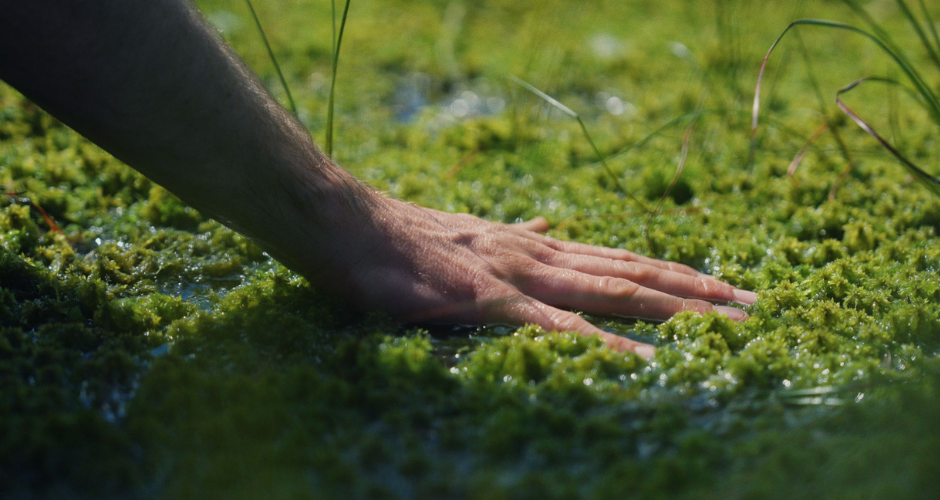
Photo: Stupendous Sphagnum – SWPP

“The peatlands within Bodmin Moor and Cornwall are seeped with history and beauty but they need our help. The work the SWPP is doing by restoring them and making them more resilient to climate change illustrates a real practical bit of work that can be done locally to help something on a global scale. Seeing them come back to life, storing water, buzzing with dragonflies and vibrant with the colours of sphagnum mosses is pure joy. It’s something that everybody involved in should be so proud of and enjoy. Lets just do more of it!” – Morag Angus, SWPP Manager. 

Photo: Sphagnum Mosses – SWPP

Thomas Thrussel at Colquite Farm has demonstrated a strong commitment to peatland restoration on the edge of Blacktor Downs on Bodmin Moor. He successfully applied to Cornwall National Landscape’s  Farming in Protected Landscapes programme for funding in order to  commission a detailed site management plan to safeguard the mire’s ecological integrity, promoting controlled grazing to prevent overgrazing, and the installation of leaky-dams in order to retain water on-site and keep the peat wet all year round.

It is hoped that by preventing the peat marsh from drying out, the carbon sequestered will remain locked up. Moreover, by improving the habitat and peatlands it is hoped that the ecosystem will be able to capture more carbon.  

 
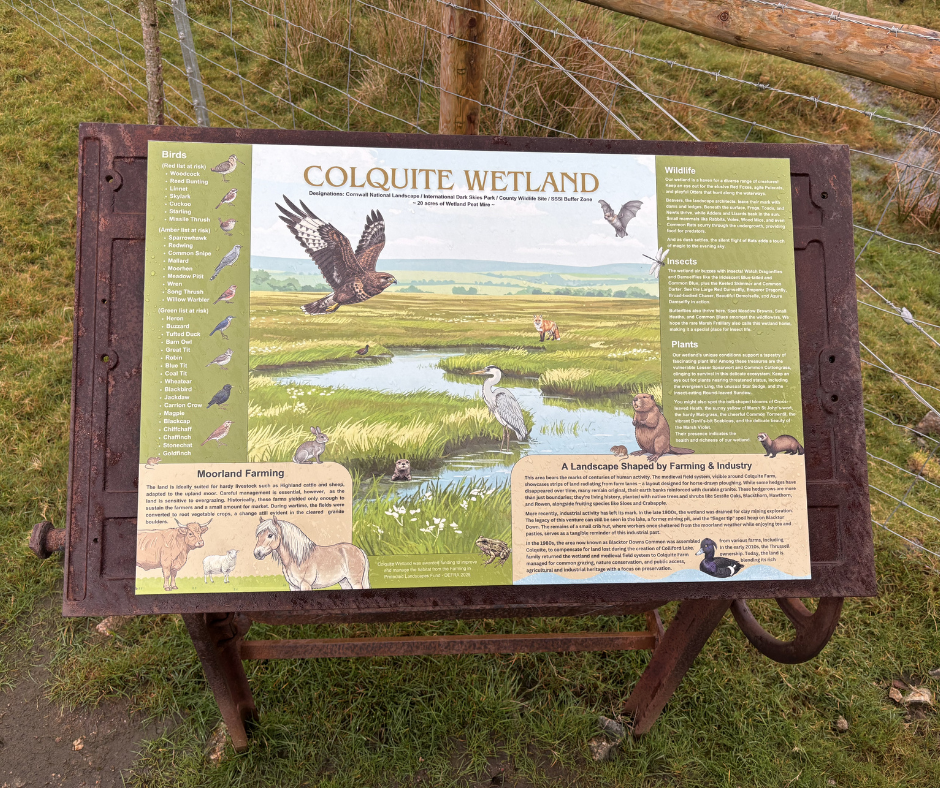
Thomas knows that in order to future-proof the site for the next generation education of peatland is vital.  Through the use of beautifully bespoke interpretation boards and educational area where pond-dipping can take place, the project at Colquite should help to ensure that both habitat conservation and community awareness around the importance of peatlands is improved. 

“We still have a further eight years of improvements and management of the peatland as planned out in our FiPL funded Management Plan which includes more leaky dams, creation of more water pools and further regular visits from schools and community groups to help promote these types of wetland ecosystems. Our wider plans to build on the Peatland marsh project here at Colquite Farm is to further expand wildlife corridors helping to connect the wooded areas and wetlands in the local area.”

“I am keen to encourage and help neighbouring landowners with their own similar projects where possible. We see this work as never complete but only the start of restoring the landscape for the benefit of the three aims nature, farming and public” – Thomas Thrussel, Bodmin Moor Farmer. 

Photo: Interpretation Panel at Colquite Farm

The Farming in Protected Landscapes team at Cornwall National Landscape also actively works with various farmers, market gardeners and land managers across Cornwall to reduce their reliance on peat-compost. As an example, the team have recently worked with Cornwall Heritage Trust to fund a trial process of using the arisings from bracken control activities to make compost. Like many market gardeners and ranger teams across the county, making their own, peat free compost in-house has not only helped to slow the degradation of peatlands, but it’s also improving business resilience as a whole, with less expenditure on bought-in inputs and a potentially sellable locally produced product. 

Cornwall National Landscape is also championing peatland restoration on Bodmin Moor, Section 12 of Cornwall National Landscape through community engagement and education. In collaboration with the South West Peatland Partnership, our ‘Natural Beauty & The Beast’ initiative, funded thanks to The National Lottery Heritage Fund, has hosted three interactive ‘Bog Days,’ attracting over 60 participants. These events highlighted the vital role peatlands play in storing carbon, supporting biodiversity, and regulating water, while raising awareness of the urgent need for action to protect these fragile habitats. Without intervention, these unique ecosystems face significant risk, making restoration efforts critical for the future of Bodmin Moor and beyond.  

“Cornwall National Landscape is proud to work closely with the South West Peatland Partnership, to restore and rewet our iconically important peatland. This collaboration is vital for climate, nature and communities; helping to conserve natural beauty, increase carbon storage, restore natural functions, improve flood resilience and water quality and enhancing a mosaic of habitats across Bodmin Moor and beyond.” Emma Browning-Fitch, Cornwall National Landscape Partnership Manager. 

Protecting and regenerating our peatlands can’t wait. These fragile ecosystems sit on the frontline of climate change, already feeling the strain of heavier rainfall, drier spells and rapidly shifting conditions. The work happening across Cornwall and the South West shows what’s possible when communities, farmers and restoration partners come together but without long-term, large-scale investment, these gains remain vulnerable. If we act now, we can secure peatlands that are wetter, healthier and more resilient, safeguarding carbon stores, wildlife, water quality and the landscapes we love for generations to come. This is our moment to commit before the window to protect these irreplaceable habitats closes

top border