08 – South Coast Western

Dry Tree Barrow

Krugow Goon Helghi

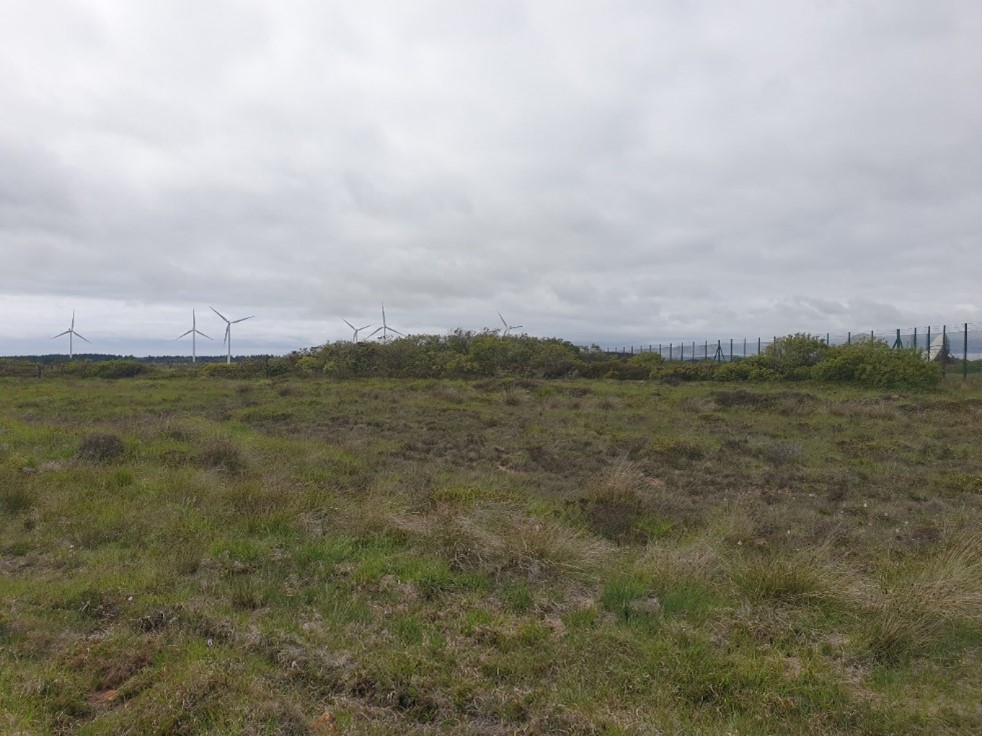
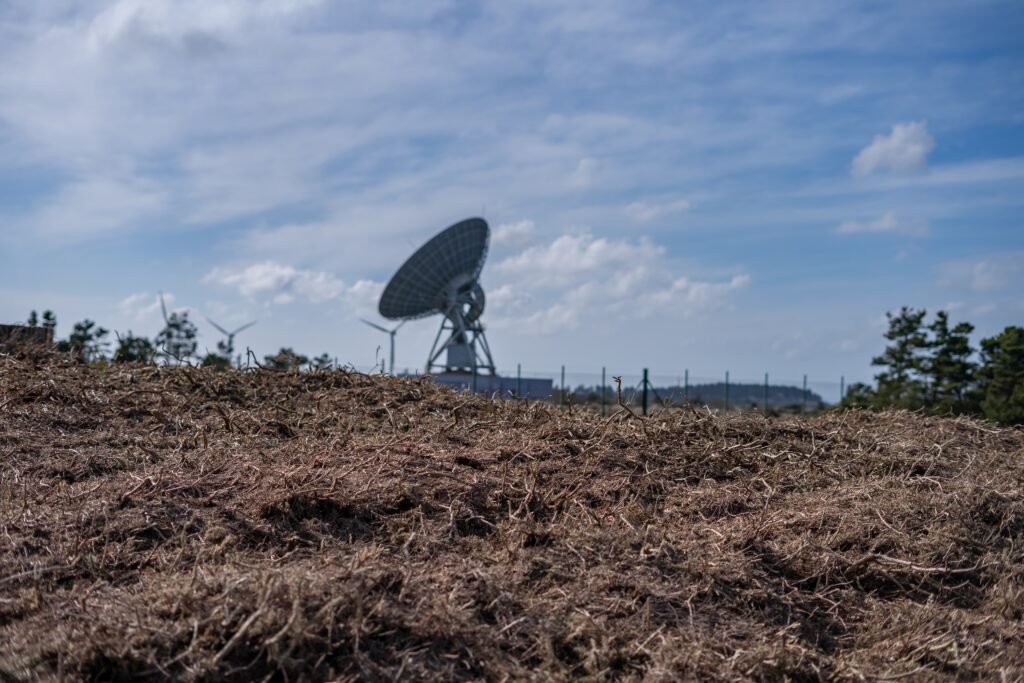
A quiet spot on Goonhilly Downs hides six ancient burial mounds, right next to the giant satellite dishes.

Dry Tree Barrow

Periods

History

Overview

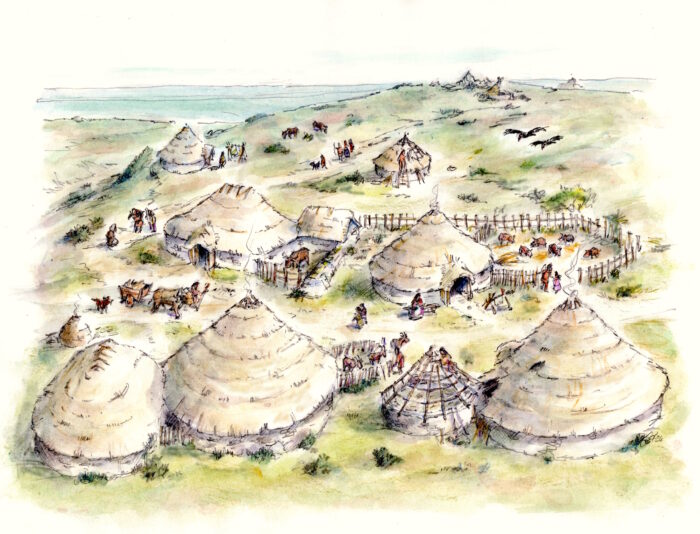
Dry Tree Round Barrow is near the satellite station on the highest point of Goonhilly Downs. It is part of a large group of Early Bronze Age round barrows on the Lizard peninsula. These were burial mounds made of earth or stone, sometimes with surrounding ditches, and likely held one or more burials. Their presence shows that the land was heavily settled about 4,500–3,500 years ago. At that time, the area was mostly grassland, used for summer grazing, collecting turf and gorse for fuel, and hunting. The barrows may also have marked territory, showing how important honouring the dead was in Bronze Age society. Together with the Dry Tree menhir (a standing stone that fell long ago and was re-erected in 1928), these barrows formed a large ceremonial landscape.

Dry Tree is one of the bigger barrows and a good example of the others scattered across the Lizard. It is a circular mound called a “bowl barrow,” about 27m wide and 1.9m high, though it was probably taller when built. A quarry ditch likely surrounds it, where material for the mound was taken, but this is now hidden by vegetation. Hollows on the top and sides show that it was dug into in the past, though no records exist.

The barrow was first recorded on the 1840 Tithe Map for Ruan Major parish and noted by the Royal Geological Society of Cornwall in 1843. Richard Thomas described it in the West Briton newspaper in 1851. It appeared on the first Ordnance Survey map around 1880. Today, it can be seen in aerial photos, but thick vegetation often makes it hard to reach.

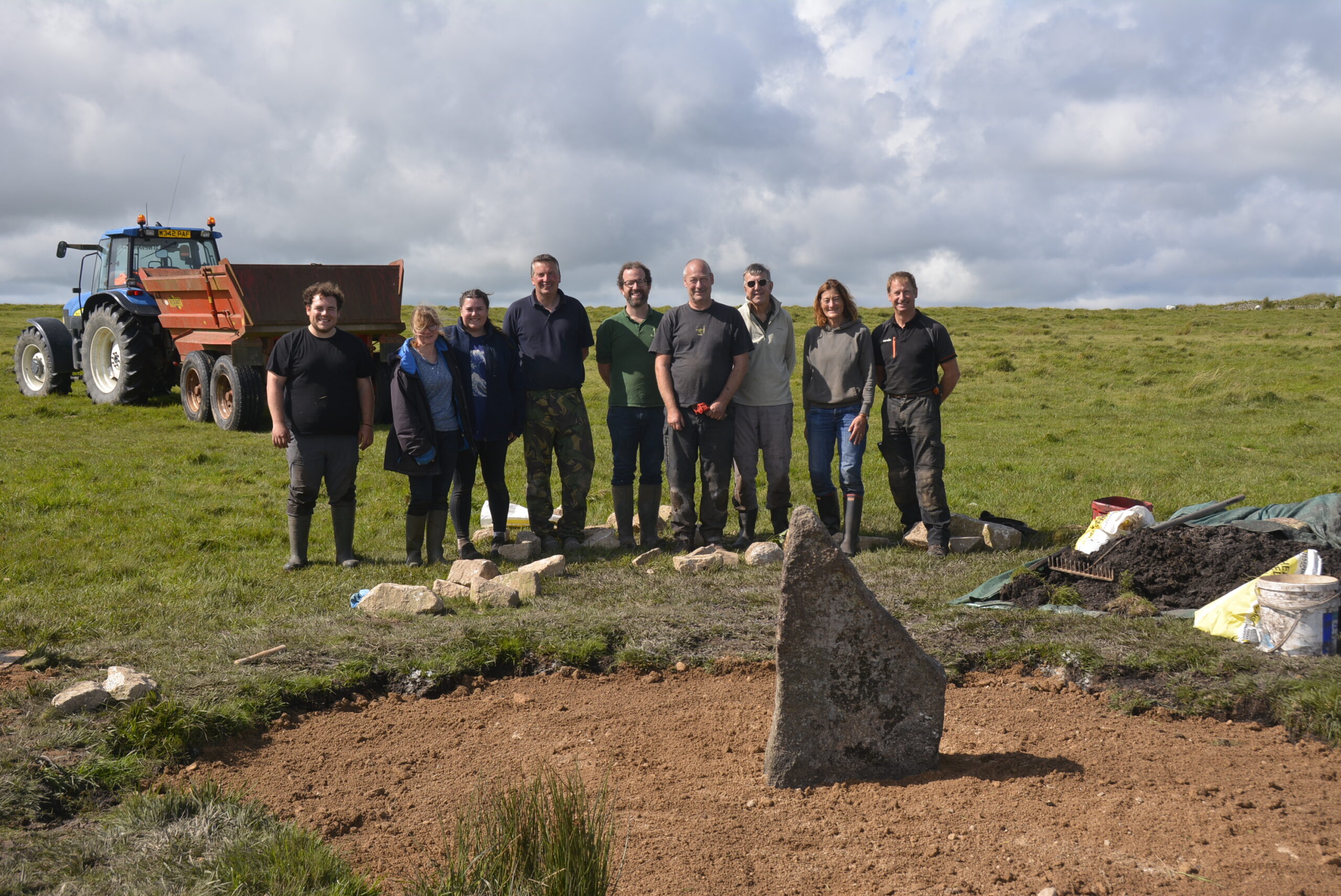
Dry Tree Barrow was part of Cornwall National Landscape’s A Monumental Improvement Project, which aimed to ensure that 40 scheduled monuments across Cornwall National Landscape were better protected, identified and enjoyed by a wider range of people. Between 2022 – 2025, the Project delivered conservation repairs, installed new heritage interpretation signage, ran a range of community volunteering events and developed new website resources. The Project was primarily funded thanks to The National Lottery Heritage Fund, with support from our other partners – Cornwall Council, Historic England, The National Trust, Cornwall Heritage Trust and Cornwall Archaeological Society.

Historical Significance

Dry Tree Barrow is not only part of the Bronze Age barrow cemetery but also marks the point where five parish boundaries meet. It was named in a 10th-century Anglo-Saxon charter as cruc drænoc, meaning “barrow at thorns.” In medieval times, it remained a landmark along an important track across the Downs. The name Goonhilly, first recorded in 1240, probably means “downs of hunting.”

Today, the site is a Scheduled Monument within the Lizard National Nature Reserve, and it is part of the Goonhilly Downs Site of Special Scientific Interest and The Lizard Special Area for Conservation. The wider cemetery is a surviving piece of a much bigger prehistoric story. Despite early digging, the bowl barrow is still well-preserved and holds archaeological and environmental evidence. This evidence could tell us about its construction, how long it was used, its role in marking territory, social organisation, burial and ritual practices, and its place in the wider landscape.

Myths and Legends

Whispers in the Fog: Highwaymen Tales

Dry Tree Barrow is not only part of the Bronze Age barrow cemetery but also marks the point where five parish boundaries meet. It was named in a 10th-century Anglo-Saxon charter as cruc drænoc, meaning “barrow at thorns.” In medieval times, it remained a landmark along an important track across the Downs. The name Goonhilly, first recorded in 1240, probably means “downs of hunting.”

Today, the site is a Scheduled Monument within the Lizard National Nature Reserve, and it is part of the Goonhilly Downs Site of Special Scientific Interest and The Lizard Special Area for Conservation. The wider cemetery is a surviving piece of a much bigger prehistoric story. Despite early digging, the bowl barrow is still well-preserved and holds archaeological and environmental evidence. This evidence could tell us about its construction, how long it was used, its role in marking territory, social organisation, burial and ritual practices, and its place in the wider landscape.

Visuals

Dry Tree Barrow

Panoramas

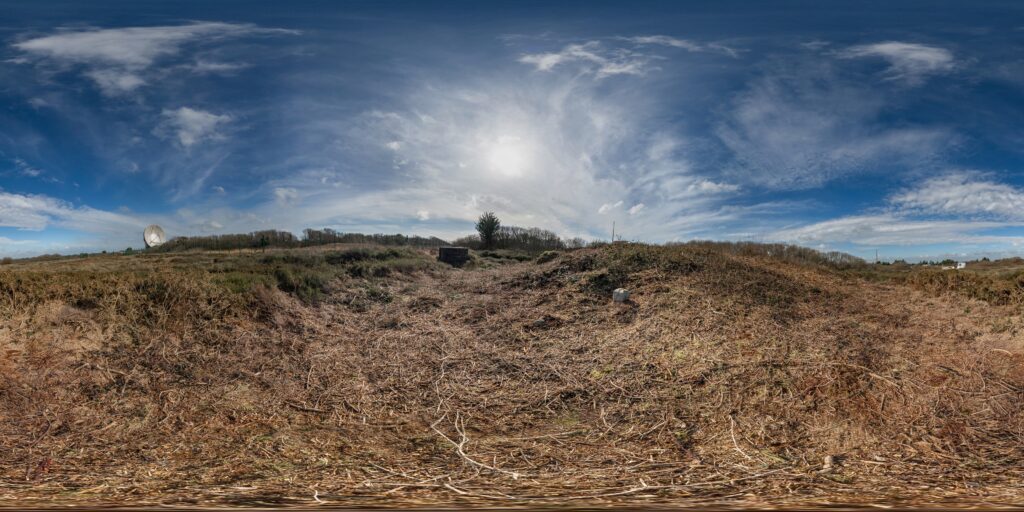
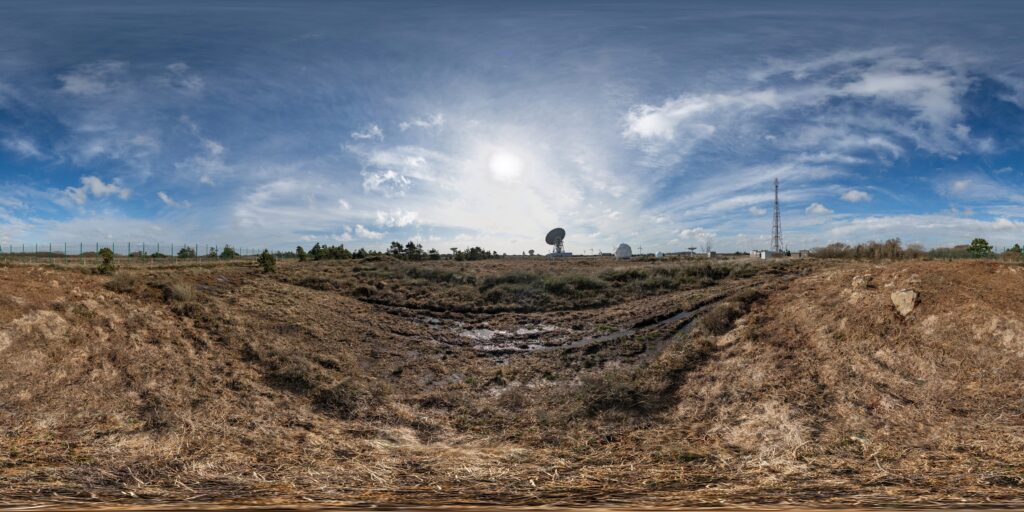
Take a closer look at Dry Tree Barrow through these panoramic views – where ancient history meets the open Cornish sky.

Goonhilly Barrow Landscape

This wide view shows the natural rise of one of the barrows, blending quietly into the heathland near Goonhilly Earth Station.

Click to View

Goonhilly Barrow Detail

Zoom in to see the textured surface of the barrow, shaped by time and weather.

Click to View

Protect

Goonhilly Barrows

Features of Interest

The Dry Tree Barrows are protected as a Scheduled Monument, which means they’re recognised as being really important to our history. These six bowl barrows sit quietly beside the modern satellite dishes at Goonhilly Earth Station, but they’ve been part of this landscape for thousands of years. The grassy mounds, hidden ditches and nearby standing stone (Dry Tree Menhir) are all clues to how people once used this place. Because the barrows are quite fragile, it’s important to stick to paths and avoid climbing on the mounds, so they can stay safe for future explorers to discover too.

Goonhilly-Barrow-4-06
Goonhilly-Barrow-4-04

Local Flora & Fauna

Goonhilly Downs is not just rich in history it’s full of life too! The area around Dry Tree Barrow is home to rare plants like Cornish heath, a pinkish-purple flower that only grows in this part of the UK. In late summer, the heathland bursts into colour with heather, gorse and wild grasses, buzzing with bees and butterflies.

Animals love it here too. Skylarks sing high above the open moor, while stonechats perch on gorse bushes, calling to one another with sharp clicks. This special mix of wildlife makes Goonhilly a great place to explore and learn about nature, just remember to tread gently and leave everything as you found it.

How Visitors Can Help

Just by visiting carefully, you’re already making a difference. Stick to the paths to protect the fragile plants and barrows and try not to walk on the mounds themselves. Taking litter home helps keep the site clean for people and wildlife.

Efforts and Challenges

Looking after a site as old and open as Dry Tree Barrow isn’t easy. Over time, the weather, curious feet and even motorbikes have caused damage to the barrows and surrounding land. One of the biggest challenges is erosion when wind, rain or people slowly wear away the mounds and paths. Because the barrows look like simple grassy bumps, it’s easy for visitors to forget they’re ancient monuments that need care.

To protect the site, teams are working to monitor the condition of the barrows and encourage people to use safe paths. Signs and digital tools are helping tell the story of the site without needing to put up lots of structures. Volunteers also play a big role, helping with surveys and keeping an eye on changes. The aim is to balance access and protection, so everyone can enjoy the history without harming it.

Goonhilly-Barrow-2-19

Translation Explanation

Dry Tree Barrow becomes Krugow Goon Helghi / Ynkleudhva Krug Goon Helghi in Cornish.
It means krugow – tumuli, goon helghi – hunting downs, ynkleudhva – cemetery,  krug – tumulus and goon helghi – hunting downs.

Visit

Directions

Grid Ref: SW 72203 20921

Find with what3words: overpaid.senior.serve

Get Directions

Access and Visitor Information

Plan your visit with essential details on transport and parking options, available facilities, route descriptions and accessibility information to ensure a comfortable and enjoyable experience at any of our historical monuments.

Get Involved

You can play a part in preserving its beauty and history for future generations. Volunteering opportunities range from helping with conservation efforts to assisting with educational programmes and community events. Whether you have a passion for nature, history, or simply love the outdoors, there’s a way for you to contribute. Join us and make a difference while connecting with others who share your enthusiasm for Cornwall’s heritage. Contact us to find out more about how you can get involved!

teal rip edge bottom

Give a little back by volunteering

Cornwall National Landscape is a non-profit organisation that conserves the unique landscapes, wildlife, and cultural heritage of Cornwall. Volunteering for the protected landscape provides a rewarding experience of giving back to the community and preserving the Cornwall's natural beauty.

teal rip edge bottom
top border