Monitoring & Evidence
Our objectives can be achieved through various means such as but not...
View page
Yet Kewnans
Hidden among the rocks and rare Golden Hair lichen, Kynance Gate is made up of two clusters of roundhouses. Altogether, there are at least 21 houses that tell the story of people living and working here thousands of years ago. From farming animals to making tools and pottery, this ancient village shows how closely people lived with the wild landscape around them.
8000-3500 BC (Mesolithic)
Middle stone-age people lived in the area, leaving behind their discarded flint tools.
1200 BC (Middle Bronze Age)
This is the earliest phase of construction at the site. The settlement may have been used seasonally for grazing and possibly metalwork.
500 BC - 100 AD (Iron Age)
After a period of abandonment, the site was reoccupied during the Iron Age. Several of the roundhouses were built during this phase.
Medieval Period
Its exact date remains unclear.
1896 AD
The fire revealed traces of the site and led to the partial excavation of two roundhouses by the Royal Institution of Cornwall.
1950s
A local schoolboy found prehistoric pottery at the site, prompting 11 seasons of excavation.
1956 AD
Kynance Gate was designated as a Scheduled Monument, protected by law for future generations to learn from and enjoy.
1960s
Some of the finds from the excavation finds were displayed at Helston Museum of Cornish Life.
1970s
The site became part of the Lizard National Nature Reserve, managed by Natural England.
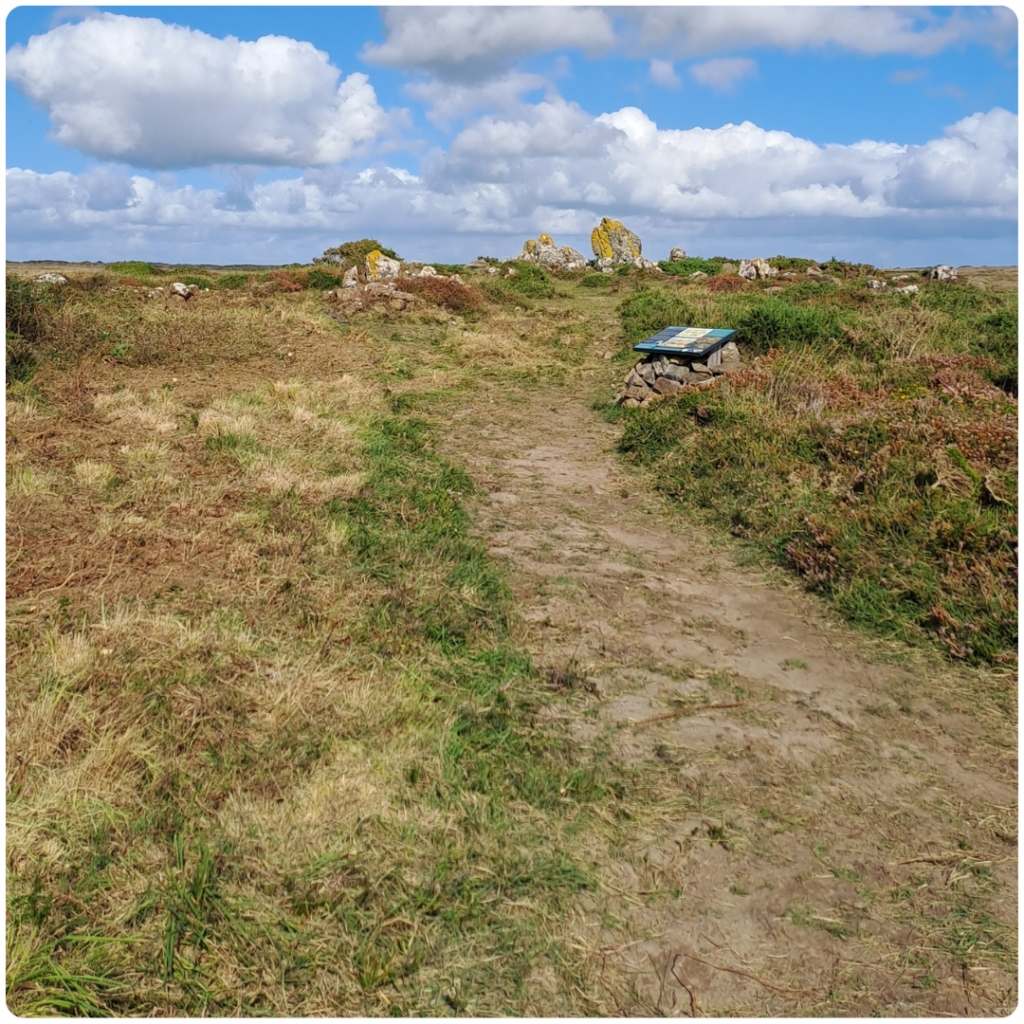
A large settlement of circular huts can be found on the open moorland overlooking Kynance Cove. There are two groups of the remains of stone dwellings, and also stone walls indicating their associated small fields. The north-eastern group includes possibly eight circular or slightly oval-shaped buildings measuring an average 9m diameter, with walls of up to 0.4m high, and which have various attached enclosures. The south-western group are constructed on a raised, terraced platform featuring at least nine circular or oval stone dwellings defined by thick double-faced walls and all linked together by boundaries to form two enclosures.
The settlement was first recorded on the Ordnance Survey map around 1880, with the first excavation taking place after a heath fire in 1896 when members of the Royal Institution of Cornwall spent an afternoon excavating two hut circles down ‘to floor level’. The site was then largely forgotten until a schoolboy in the early 1950s discovered some pottery there. His headmaster from Lizard School, Ivor Thomas, initiated the Lizard Field Club excavations which lasted from 1953 to 1964, mainly concentrating on the huts in the southern group and their immediate surrounding areas, with a single excavation in one of the northern group huts in 1954.
These excavations revealed over 2000 sherds of pottery, stone artefacts, flints and fragments of clay moulds used for producing bronze axes dating to the Middle Bronze Age (c 1400 – 1000BC). Layers of occupation debris, post holes, paving and hearths were found from this period of settlement, but no structures survived. Following an apparent period of abandonment, the settlement was re-used and extended during two phases of Iron Age and Romano-British occupation represented by the two contrasting groups of circular and oval buildings (Thomas 1956). It is thought likely that Kynance Gate was occupied during the summer months by farmers grazing their herds on Predannack and Lizard Downs before returning to more sheltered settlements for the winter. The excavation has been published only as a series of notes, and the finds are located in Helston Museum of Cornish Life.
Kynance Gate hut circle settlement was part of Cornwall National Landscape’s A Monumental Improvement Project, which aimed to ensure that 40 scheduled monuments across Cornwall National Landscape were better protected, identified and enjoyed by a wider range of people. Between 2022 – 2025, the Project delivered conservation repairs, installed new heritage interpretation signage, ran a range of community volunteering events and developed new website resources. The Project was primarily funded thanks to The National Lottery Heritage Fund, with support from our other partners – Cornwall Council, Historic England, The National Trust, Cornwall Heritage Trust and Cornwall Archaeological Society.
This complete settlement, spanning several periods of prehistory, has provided much important information regarding the life of our ancestors and will contain many more features and artefacts to further our knowledge, should the opportunity for modern excavation arise. Modern research and analysis of the existing archive will provide updated information on how people lived and worked at Kynance Gate settlement during the Bronze Age, Iron Age and Romano-British periods.
The site is prone to dense scrub overgrowth , which can obscure the site from view and make it difficult to understand. Maintenance of the vegetation across the site is carried out by the landowner and supported by volunteer groups as part of the legacy of the Monumental Improvement Project.
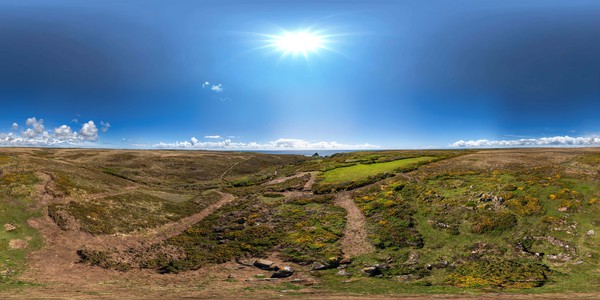
This panoramic view captures the sweeping landscape surrounding Kynance Gate, a site rich with history. From this vantage point, you can see where ancient roundhouses once stood, blending into the wild heathland that stretches out towards the dramatic Cornish coastline.

This panoramic shot highlights the rugged terrain around Kynance Gate, where patches of green meet rocky outcrops. The landscape reveals subtle traces of the prehistoric settlement, blending into the natural surroundings that have sheltered this ancient site for centuries.
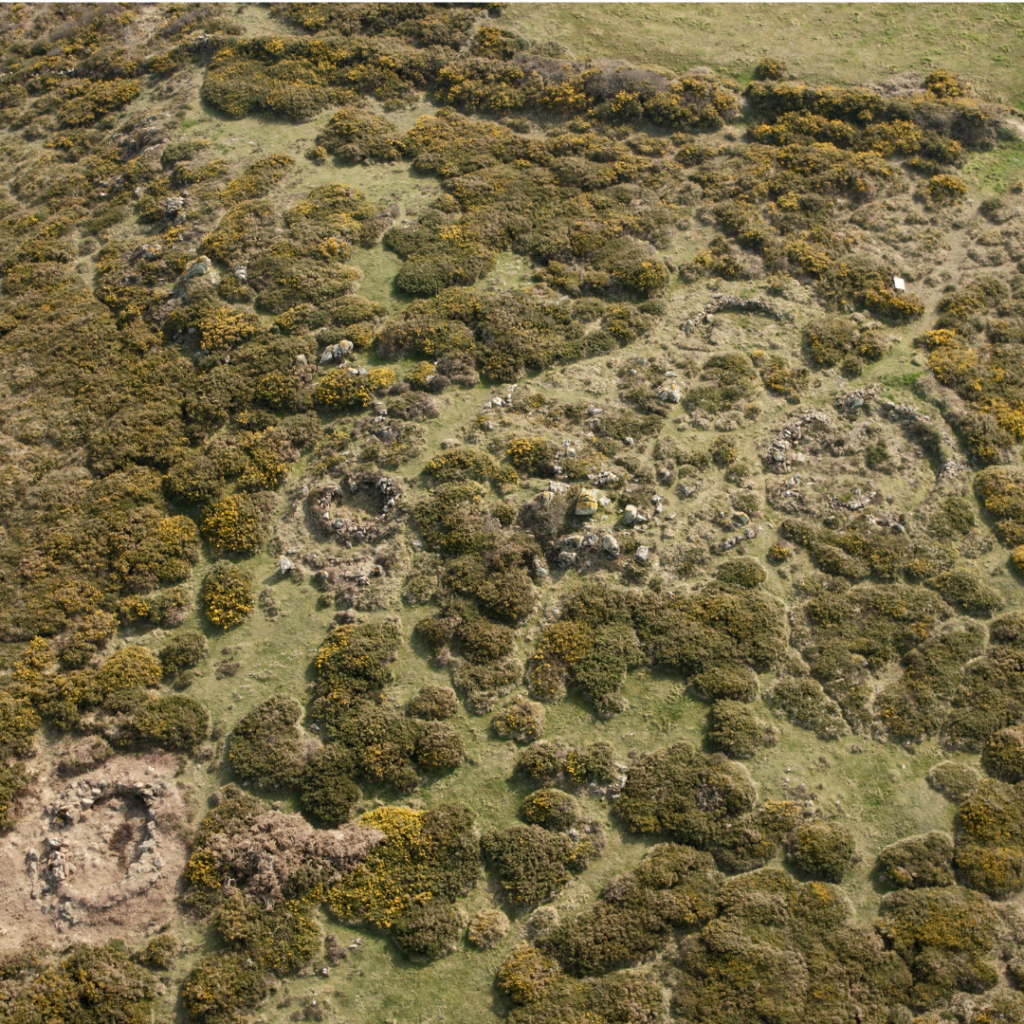
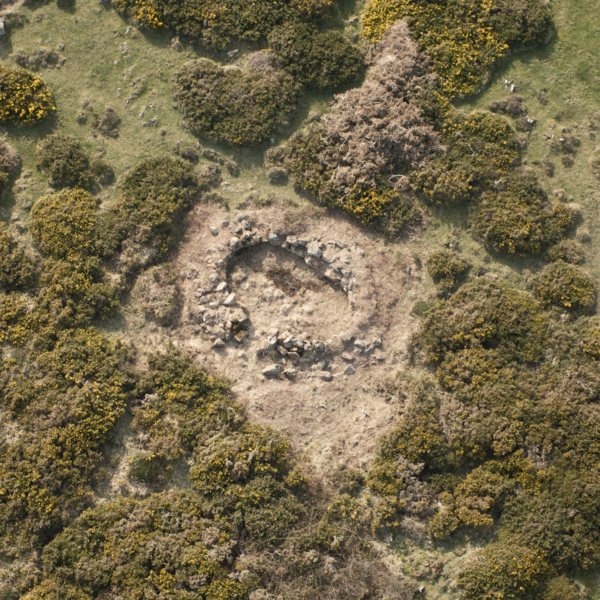


Iron Age hut circle at Kynance Gate, Kynance Cove, Lizard, Cornwall.
Protecting Cornwall’s natural landscapes is no easy task. With such a diverse range of ecosystems, from windswept cliffs to sheltered valleys, it takes a lot of work to ensure that wildlife and plants can thrive. Conservation teams monitor these areas, repairing damaged habitats and keeping an eye on endangered species. However, challenges like climate change, pollution and the spread of invasive species make this work even harder. As the weather patterns shift, some animals and plants struggle to survive in changing conditions.
Human activity can also put pressure on the environment, so local communities and visitors are encouraged to play their part by sticking to marked paths and avoiding disturbing wildlife. Protecting these precious ecosystems is a shared responsibility, requiring constant care and attention.
Check out the conservation efforts carried out by the Monumental Improvement team at Kynance Gate.
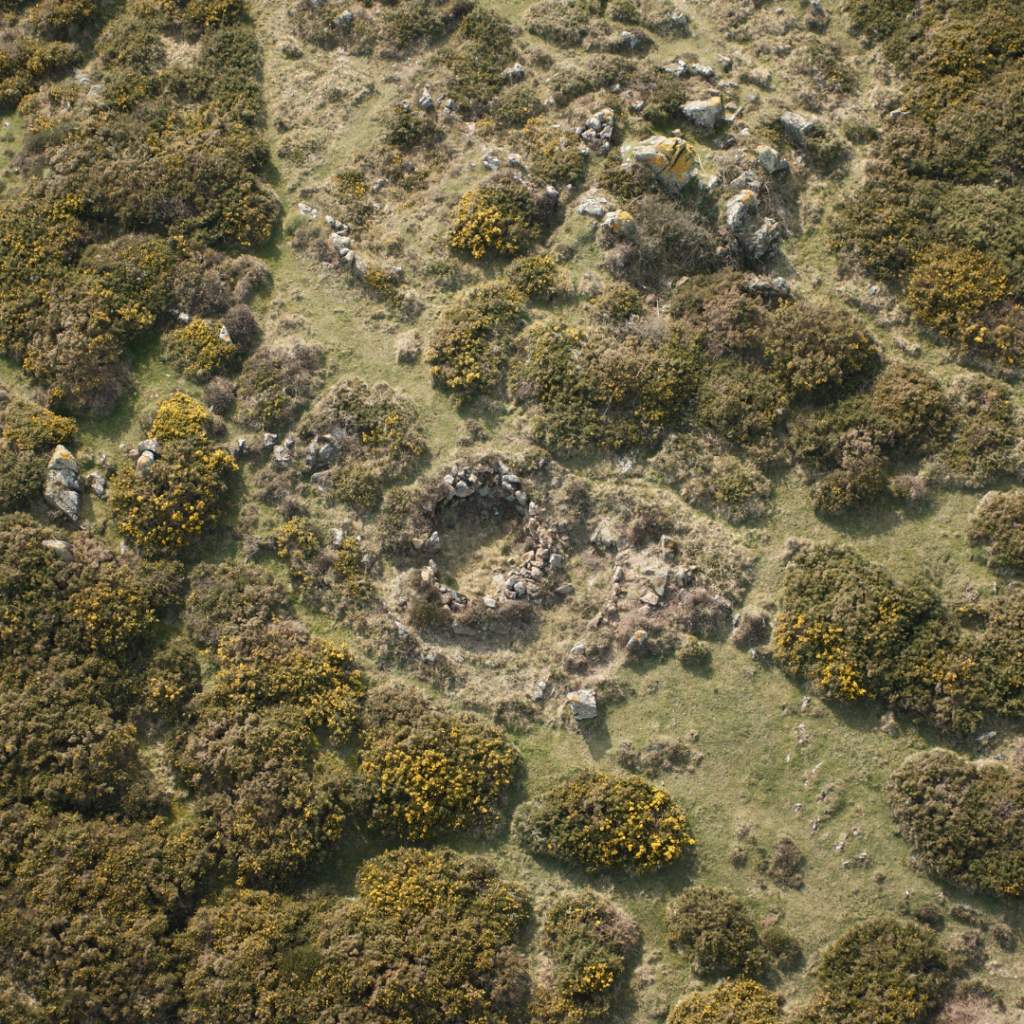
Visitors play a big role in protecting Cornwall’s beautiful landscapes. By staying on marked paths, you help prevent damage to delicate plants and wildlife habitats. Always take your rubbish with you, as litter can harm animals and spoil the natural beauty. If you’re lucky enough to spot wildlife, watch from a distance and avoid disturbing them. Every small action helps keep these special places thriving for future generations to enjoy and explore.
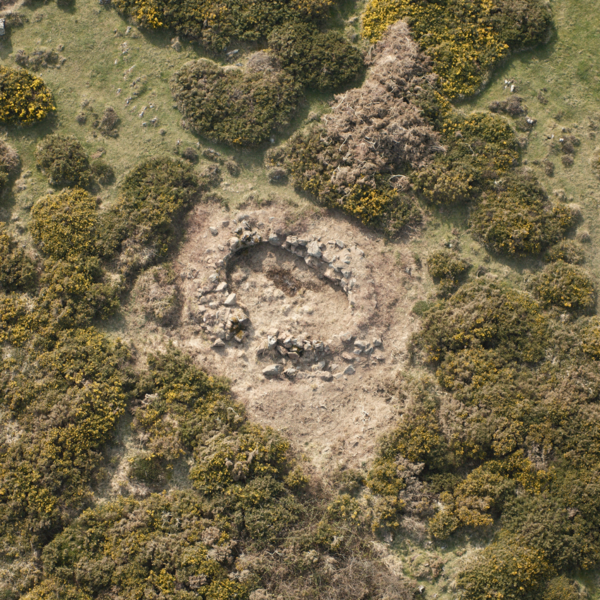
Kynance Gate sits in the middle of the Lizard heathlands, one of the most special landscapes in Cornwall. The tough, windy ground is covered in plants like heather, gorse, and rare wildflowers that can survive the salty air and rocky soil. These heathlands are full of life, from buzzing insects to colourful birds.
One of the rarest sights here is the bright orange Golden Hair-lichen, which clings to the rocky outcrops around the settlement. It’s a sign of clean air and a healthy habitat. The nearby cliffs and coastal paths are also home to Cornwall’s famous red-billed chough and other seabirds. Every part of this wild landscape is important for nature to thrive.
The heathland around Kynance Gate is full of hardy plants that can survive the salty winds. You’ll see purple heather, bright yellow gorse, and rare wildflowers that only grow on the Lizard, like Cornish heath and fringed rupturewort. Look closely at the rocks and you might spot patches of Golden Hair-lichen, glowing orange in the sunshine.
Above the heath, buzzards glide through the sky, and if you’re lucky, you might spot a Cornish chough with its red beak and legs. Rabbits dart through the grass, and colourful butterflies flutter between the flowers. Every plant and animal here plays a part in keeping this wild landscape alive and healthy.
Kynance Gate becomes Yet Kewnans in Cornish.
It means yet – gate & kewnans – steep-sided valley.
Plan your visit with essential details on transport and parking options, available facilities, route descriptions and accessibility information to ensure a comfortable and enjoyable experience at any of our historical monuments.
When enjoying the countryside, it’s important to follow the Countryside Code to protect nature and preserve its beauty for everyone. This includes simple, respectful actions like not littering always take your rubbish home or dispose of it properly in bins. Stick to designated paths to avoid damaging crops or wildlife habitats, and keep gates and property as you find them, whether open or closed. Be mindful of livestock and wildlife by keeping dogs under control and not disturbing animals. By following these guidelines, you contribute to the protection of the environment and ensure that others can enjoy the countryside as well.
Kynance Gate is reached by a public footpath across uneven ground, with a short walk from the nearest car park. The site is not suitable for wheelchairs or mobility scooters and the weather can change quickly, so sturdy shoes and suitable clothing are important.
There are no facilities directly at Kynance Gate, however, nearby Kynance Cove offers several amenities including a café, public toilets and a car park.
Parking is available at Kynance Cove, but spaces fill quickly during busy times. It’s a good idea to arrive early, especially in summer or on sunny weekends.
Today, some of the incredible Bronze and Iron Age pottery found here is on display at the Museum of Cornish Life in Helston.

you can play a part in preserving its beauty and history for future generations. Volunteering opportunities range from helping with conservation efforts to assisting with educational programmes and community events. Whether you have a passion for nature, history, or simply love the outdoors, there’s a way for you to contribute. Join us and make a difference while connecting with others who share your enthusiasm for Cornwall’s heritage. Contact us to find out more about how you can get involved!

Cornwall National Landscape is a non-profit organisation that conserves the unique landscapes, wildlife, and cultural heritage of Cornwall. Volunteering for the protected landscape provides a rewarding experience of giving back to the community and preserving the Cornwall's natural beauty.

Discover a wealth of knowledge in our Resources section, where you can download detailed research documents, reports, and source material compiled by our archaeology team to enhance your understanding of the site.