Monitoring & Evidence
Our objectives can be achieved through various means such as but not...
View page
Hwel Holan Trebervedh
Along the coast between Coverack and Lowland point is a hidden gem of Cornwall’s prehistoric past. This scheduled monument includes multi-period settlements, field systems and manufacturing sites along the coast edge and extending inland. A lot of the site is difficult to reach and on private land, however just off the coast path on the cliff edge is the remains of a Romano-British Salt Working Site.
4000-2500BC
The coast around Trebarveth has been the site of human occupation since at least the Neolithic Period, with pot sherds and other artefacts being found in caves nearby.
Romano-British Period
The settlement at Trebarveth and the salt-working site was likely in use during the Romano-British period.
20th Century
Throughout the 20th Century, the site was visited, studied and excavated by a variety of amateur and trained antiquarians and archaeologists.
1970
Trebarveth settlement and salt-working site is designated a Scheduled Monument, protected by law for future generations to learn from and enjoy.
Although the Salt-Working site has been studied since the 1920’s, the complex nature of the archaeology and the fragmentary excavation records leave significant archaeological and environmental potential for more information on the chronology of the settlement and its use through periods of climatic, economic and political change.
Several partial excavations have provided good information for building a basic chronology of the site. The earliest evidence for human use of the area is a Mesolithic flint working site on the south western side of Carrick Crane Rocks excavated in 1933 which produced around 650 worked flints. Several finds of Neolithic pottery in nearby caves suggest a long period of occupation along this part of the coast and hint at the wide variety of resources people have been able to exploit and live off for millennia. Extensive field systems extending from the raised beach up to the gabbro tors and associated roundhouses have produced Bronze and Iron Age pottery, stone rubbers and an iron blade.
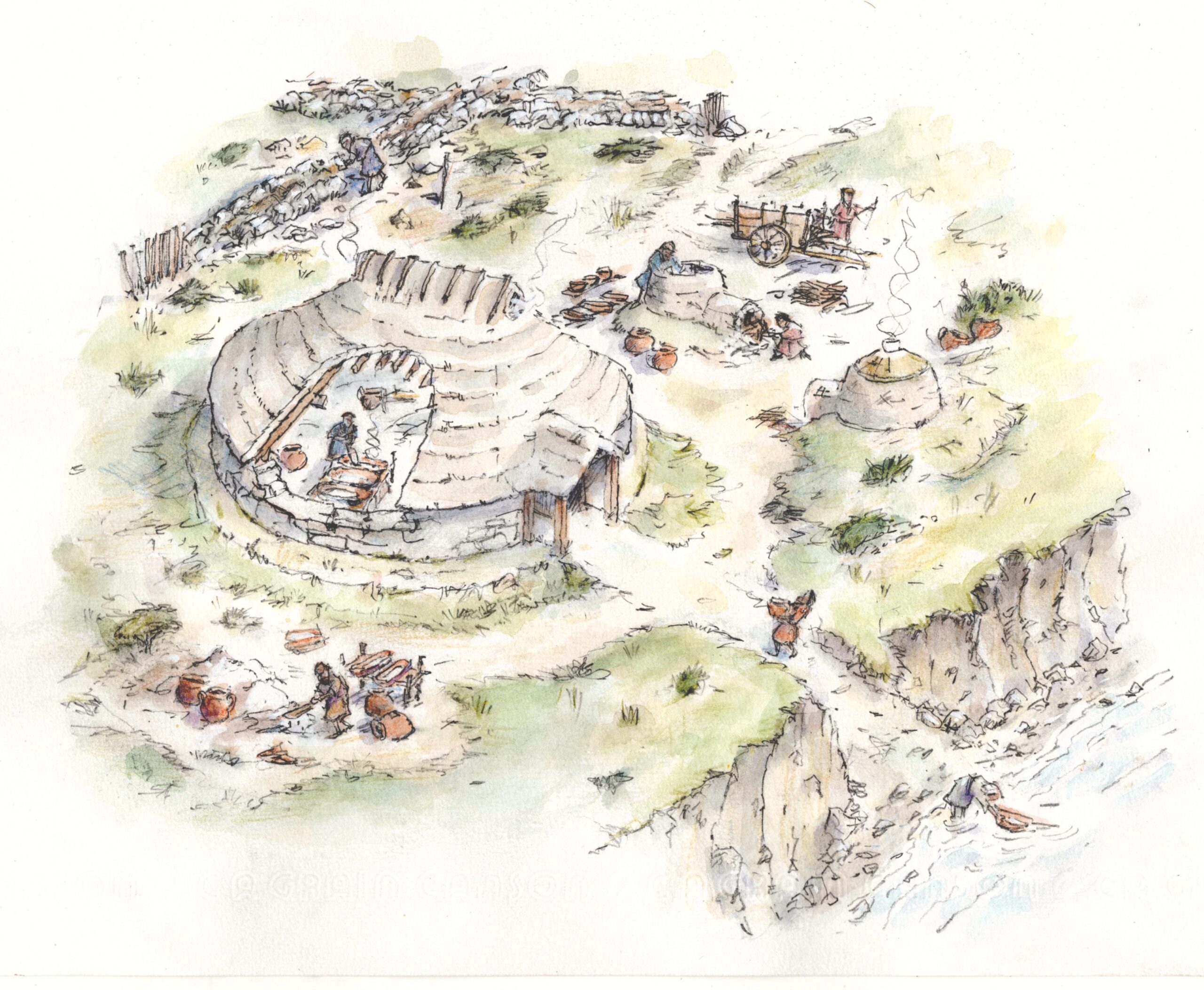
The most accessible part of the site today is a Romano-British salt making site dating to the 2nd century AD which sits dramatically on the cliff edge. The oval building, only half of which survives today, housed two rectangular stone-built ovens in which large shallow vessels called briquetage filled with sea water were heated, evaporating the water and leaving salt crystals for use in preserving food and trading. Large amounts of briquetage have been recovered from the site and as quickening coastal erosion pushes the cliff edge back, sherds of pot can be seen on the beach below.
The site of Trebarveth Settlement was part of Cornwall National Landscape’s A Monumental Improvement Project, which aimed to ensure that 40 scheduled monuments across Cornwall National Landscape were better protected, identified and enjoyed by a wider range of people. Between 2022 – 2025, the Project delivered conservation repairs, installed new heritage interpretation signage, ran a range of community volunteering events and developed new website resources. The Project was primarily funded thanks to The National Lottery Heritage Fund, with support from our other partners – Cornwall Council, Historic England, The National Trust, Cornwall Heritage Trust and Cornwall Archaeological Society.
Trebarveth is an incredibly important site in Cornish Archaeology, as it was here that the importance of gabbroic clay was first understood. The lower firing temperature of the clay made the manufacture of pots and other vessels easier with less dedicated infrastructure.
The salt-working structure (T3) has an unfortunate history of excavation, detailed in Cornish Archaeology Volume 8 (1969) with a lack of published excavation notes or reports. In 1933 Dr. Vernon Favell excavated several of the sites in the scheduled area but did not publish. The finds, supposedly in the British Museum, can no longer be found and only 5 sherds remain of the collection in the Truro Museum.
In 1952 J. Manchip White re-examined the site but his work was unpublished and the extent is of study is not clear. His finds ‘deposited in the Cambridge museum’ cannot be located.
Thankfully, Edith Downson recovered a lot of information from the last surviving member of Favell’s excavation, Mr. Guy Maynard in the 1960’s which was published and provided valuable assistance in the most recent excavation in 1969 by Dr D.P.S. Peacock.
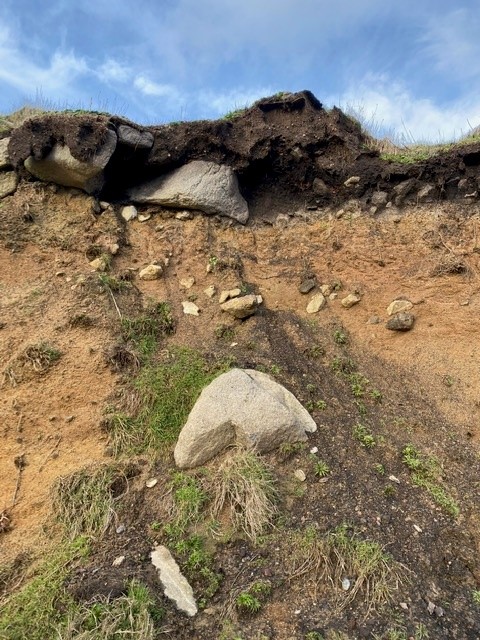
Unfortunately the site is vulnerable to erosion and since the 1969 excavation, a significant amount of the land has fallen into the sea. Roughly half of the building has eroded revealing large amounts of pottery, buried in the cliff and scattered across the beach below.


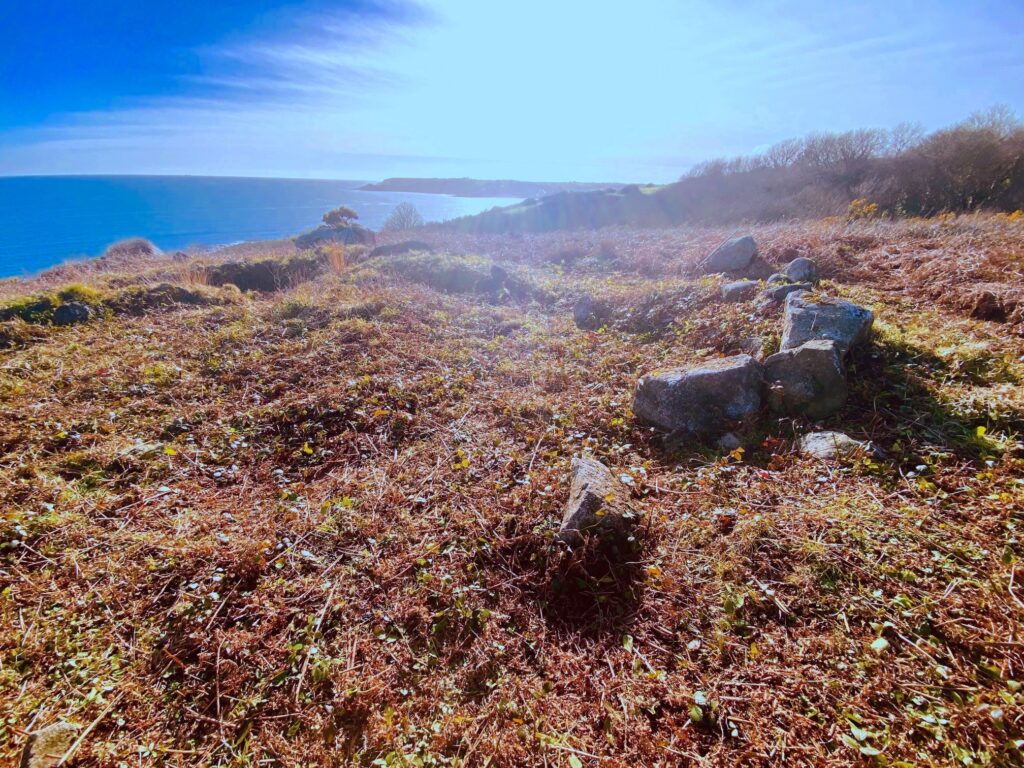
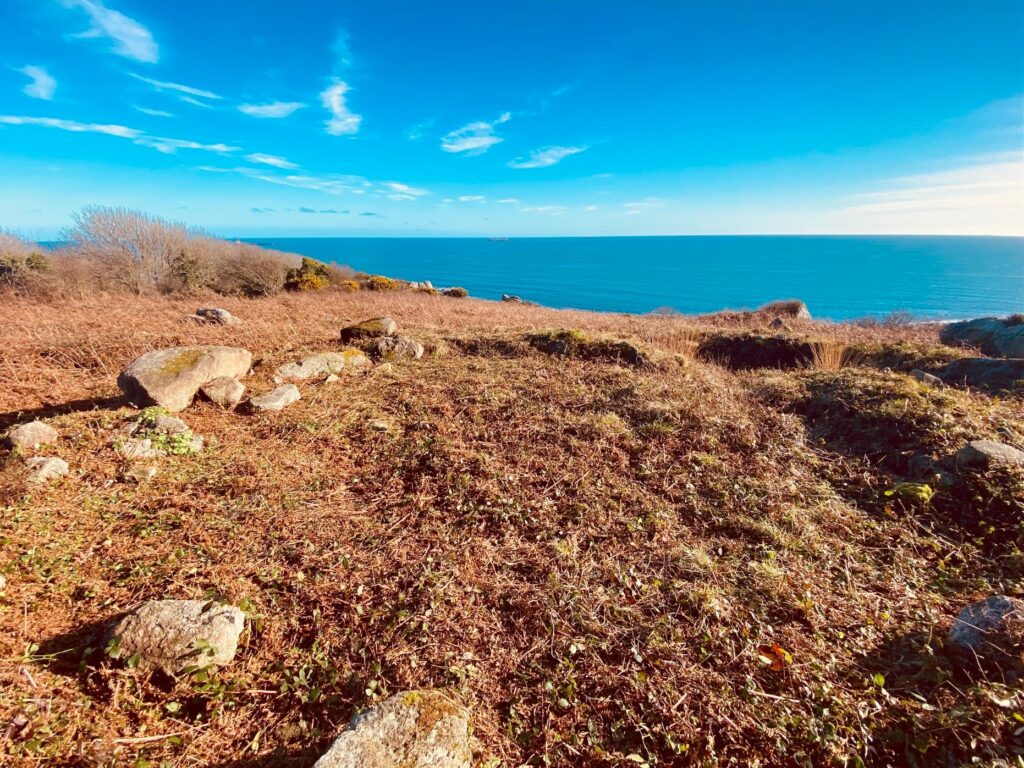


Trebarveth is full of clues about how people lived thousands of years ago. There’s an old salt-making building from Roman times, right on the edge of a cliff. People used it to heat up seawater in big pots called briquetage, leaving just the salt behind. This was really useful for keeping food fresh and for trade. There’s also evidence of roundhouses, field systems and even flint tools from the Stone Age! Pottery from the Bronze and Iron Ages has been found too, showing that people lived here for a very long time and used the land in different ways as the world around them changed.
Trebarveth sits in a wild coastal spot, where sea winds shape the land and the plants. You might see hardy grasses and low-growing flowers that can survive salty air and strong breezes. The nearby rocks and scrubland are great for birds like kestrels and stonechats. Down on the beach below the cliffs, bits of ancient pottery sometimes appear, washed out by the sea. This mix of natural life and history makes Trebarveth a special place to explore and protect.
You can help protect Trebarveth just by being careful where you walk and what you touch. The cliffs are crumbling and important pieces of history can be found in the ground and on the beach below. If you spot broken pottery or anything unusual, don’t take it. Stick to the paths, take your rubbish home and remember that this isn’t just a beautiful place, it’s also a window into the past that we all share and need to look after together.
Experts and volunteers have worked hard over the years to understand Trebarveth. Some parts were first dug up nearly 100 years ago, but not everything was written down or kept safe. That means there are still lots of questions about who lived here and how they used the land. More recent excavations have helped, especially with the salt-making site, but there’s still much to discover.
One big challenge is the sea. The cliff edge is slowly being eaten away by wind and waves. Since the last proper dig in 1969, a lot of the land and even half of the old salt-making building has fallen into the sea. This means precious objects are being lost forever. Protecting what’s left and recording it before it disappears is a race against time.


Trebarveth Settlement becomes Hwel Holan Trebervedh in Cornish. It means hwel – works, holan – salt & Trebervedh – inner farm.
Plan your visit with essential details on transport and parking options, available facilities, route descriptions and accessibility information to ensure a comfortable and enjoyable experience at any of our historical monuments.
When enjoying the countryside, it’s important to follow the Countryside Code to protect nature and preserve its beauty for everyone. This includes simple, respectful actions like not littering, always take your rubbish home or dispose of it properly in bins. Stick to designated paths to avoid damaging crops or wildlife habitats, and keep gates and property as you find them, whether open or closed. Be mindful of livestock and wildlife by keeping dogs under control and not disturbing animals. By following these guidelines, you contribute to the protection of the environment and ensure that others can enjoy the countryside as well.
The salt-making site at Trebarveth is the easiest part to visit today, sitting right on the cliff edge with views of the sea. But the ground can be uneven and slippery, especially near the edge, so it’s best for confident walkers with sturdy shoes.
There are no visitor facilities directly at Trebarveth, so it’s a good idea to plan ahead. The nearest toilets, parking and places to eat or drink can be found in nearby villages like Coverack or St Keverne.
There’s no dedicated parking at the site itself. Visitors usually park in St Keverne or nearby lay-bys and walk to the settlement. Be mindful of narrow country lanes and always park considerately.

You can play a part in preserving its beauty and history for future generations. Volunteering opportunities range from helping with conservation efforts to assisting with educational programmes and community events. Whether you have a passion for nature, history, or simply love the outdoors, there’s a way for you to contribute. Join us and make a difference while connecting with others who share your enthusiasm for Cornwall’s heritage. Contact us to find out more about how you can get involved.

Cornwall National Landscape is a non-profit organisation that conserves the unique landscapes, wildlife, and cultural heritage of Cornwall. Volunteering for the protected landscape provides a rewarding experience of giving back to the community and preserving the Cornwall's natural beauty.

Discover a wealth of knowledge in our Resources section, where you can download detailed research documents, reports, and source material compiled by our archaeology team to enhance your understanding of the site.