12 – Bodmin Moor

Stowe’s Hill Fort

High on the wild moorland of Bodmin, Stowe’s Hill Fort has stood for thousands of years. This rocky hill hides ancient secrets – stone walls, burial places and even homes where people once lived, gathered and looked after animals. It’s a place where the past peeks through the stones, telling stories from long ago.

Stowe’s Hill Fort

History

Overview

The dramatic summit of Stowe’s Hill is surrounded by two strong stone ramparts and several outworks, making it one of the largest and best-preserved Neolithic tor enclosures (a defended settlement) in Cornwall. The highest part of the hill is enclosed by a pear-shaped stone wall, built about 6,000–4,500 years ago. Linked to this is a much larger outer enclosure to the north, which may have been added later. The site lies on open moorland just north of Minions village, in an area of Bodmin Moor known for its ceremonial landscape.

The larger northern enclosure contains two Bronze Age cairns and up to 39 platforms, marked by rings of stone where shelters once stood—probably made of timber, thatch, or hides. This was likely not a permanent settlement but an important gathering place at certain times of the year.

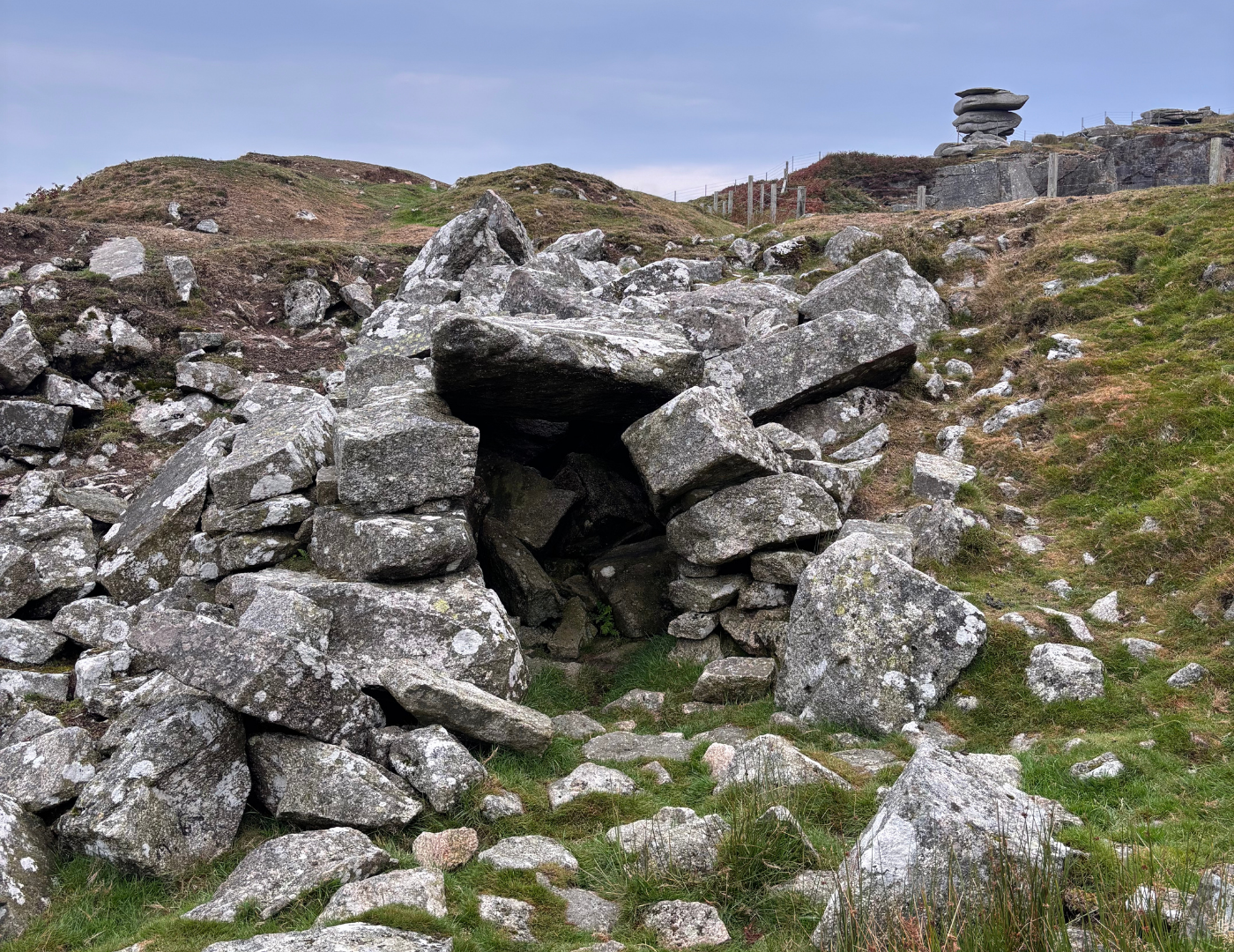
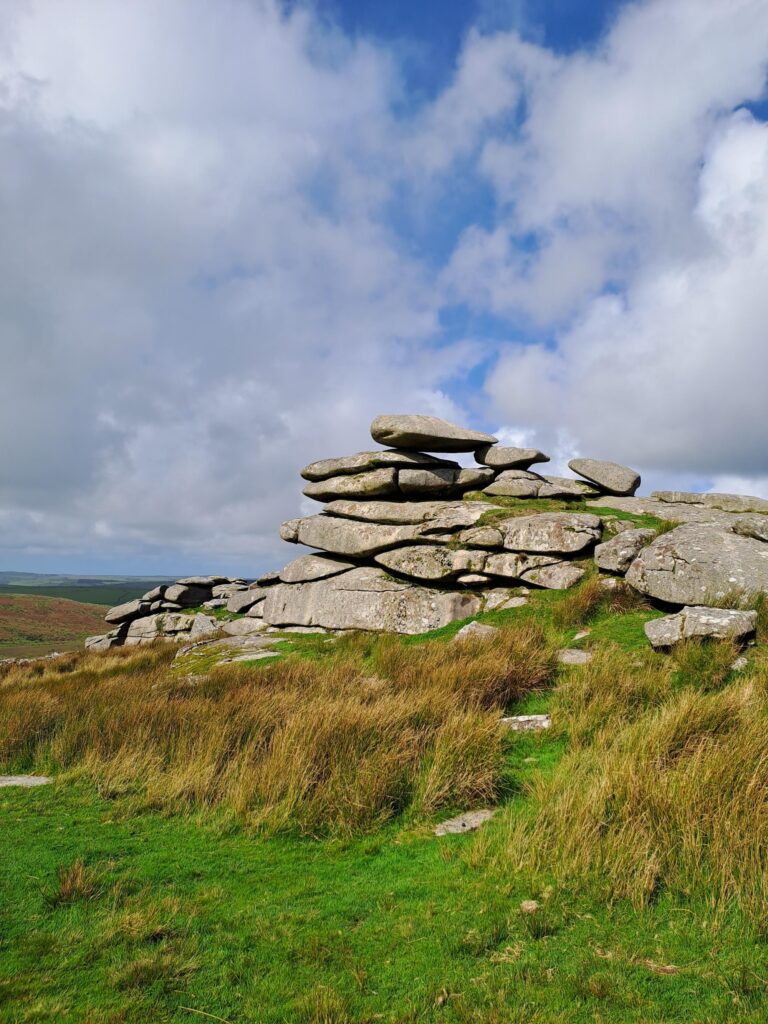
The southern enclosure on the hilltop is called Stowe’s Pound. In medieval times, it was adapted to hold stray animals until their owners paid to reclaim them. Nearby is the famous Cheesewring rock formation. The rampart walls, up to 5 m high, are built from roughly laid stone and upright slabs (orthostats). The southern tip of the monument was lost to quarrying in the 19th century. Close by, you can see shallow holes drilled into stones (Merriment Holes) where gunpowder was packed and fired during celebrations.

Stowe’s Hill Fort was part of Cornwall National Landscape’s A Monumental Improvement Project, which aimed to ensure that 40 scheduled monuments across Cornwall National Landscape were better protected, identified and enjoyed by a wider range of people. Between 2022 – 2025, the Project delivered conservation repairs, installed new heritage interpretation signage, ran a range of community volunteering events and developed new website resources. The Project was primarily funded thanks to The National Lottery Heritage Fund, with support from our other partners – Cornwall Council, Historic England, The National Trust, Cornwall Heritage Trust and Cornwall Archaeological Society.

Historical Significance

Stowe’s Hill shows how people have used the land in many different ways over time. The Neolithic enclosure is one of the earliest signs of people building big structures on Bodmin Moor. It helps archaeologists understand how early communities worked together to build and live in tough landscapes. The Bronze Age cairns and hut circles suggest that people came back to this place again and again perhaps for burials, seasonal gatherings or even ceremonies. It wasn’t a village, but it was clearly special.

In medieval times, people reused the ancient enclosure to make a cattle pound. This shows us how old places were given new jobs, helping us see how the past was never really forgotten. Even in the 19th century, people left their mark here with quarrying and celebration holes tiny drill marks filled with gunpowder to make bangs during parties! From ancient stone walls to quarry blasts, Stowe’s Hill holds layer upon layer of Cornwall’s story.

Myths and Legends

Giants, Stones and a Man Who Lived in a Cave

Stowe’s Hill shows how people have used the land in many different ways over time. The Neolithic enclosure is one of the earliest signs of people building big structures on Bodmin Moor. It helps archaeologists understand how early communities worked together to build and live in tough landscapes. The Bronze Age cairns and hut circles suggest that people came back to this place again and again perhaps for burials, seasonal gatherings or even ceremonies. It wasn’t a village, but it was clearly special.

In medieval times, people reused the ancient enclosure to make a cattle pound. This shows us how old places were given new jobs, helping us see how the past was never really forgotten. Even in the 19th century, people left their mark here with quarrying and celebration holes tiny drill marks filled with gunpowder to make bangs during parties! From ancient stone walls to quarry blasts, Stowe’s Hill holds layer upon layer of Cornwall’s story.

Visuals

Stowe’s Hill Fort

Panoramas

Take in the breathtaking view from the top of Stowe’s Hill, where ancient stones meet open sky across the wild heart of Bodmin Moor.

Stowes Hill Landscape

Stowes Hill Fort Landscape

Click to View

Stowe’s Hill Fort

Video Gallery

Stowe’s Hill Fort: Explore the Tor Enclosure in 3D

Spin, zoom and explore the mighty stone walls of Stowe’s Hill Fort in full 3D just as they stand today on the moor.

Stowe’s Hill Fort: A Closer Look at the Pound

Take a detailed look from the south of the hillfort in 3D.

Protect

Stowes-Hill_aerials-15

Features of Interest

Stowe’s Hill is packed with fascinating features that help us understand how people lived long ago. The most eye-catching is the huge stone enclosure called Stowe’s Pound, with its thick stone walls still standing tall. Inside the larger enclosure, you can spot over 30 hut platforms, these are the flat circles where people might have built shelters out of wood, thatch or even animal hides. There are also two Bronze Age burial cairns here, made from heaps of stones, where important people were laid to rest. The famous Cheesewring rock formation sits just outside the enclosure and is hard to miss.

Nearby, you can find shallow holes in the rocks called “Merriment Holes.” These were made in the 1800s to hold gunpowder for celebrations people would light them to make loud bangs echo across the moor! The hilltop also shows signs of quarrying. These changes from different times all help tell the story of Stowe’s Hill from ancient ceremonies to medieval farming and even Victorian fireworks. Every bump, rock and pathway here has something to say about Cornwall’s past.

Stowes-Hill_aerials-18
Stowes-Hill_aerials-01

Local Flora & Fauna

Stowe’s Hill is home to all sorts of plants and animals that love the wild, windy moor. You might see gorse bushes with bright yellow flowers, purple heather and soft, spongy moss covering the ground and stones. Skylarks often sing high above, while buzzards glide silently across the sky. Down on the ground, look out for moorland ponies, sheep and maybe even a hare darting through the grass. In the warmer months, butterflies and bees buzz around the flowers and if you’re really lucky, you might spot a lizard sunbathing on a warm rock. It’s not just the history that’s special here the wildlife is part of what makes this place magical.

How Visitors Can Help

You can help protect Stowe’s Hill just by being thoughtful during your visit. Stick to the paths to stop damage to the ancient stones and the plants that grow around them. Don’t climb on the walls or cairns they’re very old and can be easily harmed. Take any litter home with you, and if you spot any, feel free to pick it up. Keep dogs on leads near wildlife and grazing animals. By looking after this special place, you’re helping make sure it’s still here for future explorers to enjoy, just like you!

Efforts and Challenges

Caring for a site like Stowe’s Hill takes teamwork and careful planning. Archaeologists and volunteers work together to check on the condition of the ancient stones, paths and wildlife. Surveys and photos help keep track of changes and signs help visitors understand what they’re looking at. Every small action from repairs to research helps keep this important place safe.

But there are some tricky challenges too. The stone walls and cairns are thousands of years old and can be damaged by people climbing on them or by weather, especially strong wind and rain. Gorse and bracken can quickly take over parts of the site, hiding features and making paths harder to see. Grazing animals help manage the plants, but too many feet, human or hooved can wear away the ground. Balancing access with protection is always a challenge, but with care and respect, the site can stay open and thriving for everyone to enjoy.

Stowes-Hill

Visit

Directions

Grid Ref: SX 25720 72732

Find with what3words: eyelashes.endlessly.homework

Get Directions

Get Involved

You can play a part in preserving its beauty and history for future generations. Volunteering opportunities range from helping with conservation efforts to assisting with educational programmes and community events. Whether you have a passion for nature, history, or simply love the outdoors, there’s a way for you to contribute. Join us and make a difference while connecting with others who share your enthusiasm for Cornwall’s heritage. Contact us to find out more about how you can get involved!

teal rip edge bottom

Give a little back by volunteering

Cornwall National Landscape is a non-profit organisation that conserves the unique landscapes, wildlife, and cultural heritage of Cornwall. Volunteering for the protected landscape provides a rewarding experience of giving back to the community and preserving the Cornwall's natural beauty.

teal rip edge bottom

Dig In...

Discover a wealth of knowledge in our Resources section, where you can download detailed research documents, reports, and source material compiled by our archaeology team to enhance your understanding of the site.

top border