Monitoring & Evidence
Our objectives can be achieved through various means such as but not...
View page
Kist Kemmyndir Kelli
Hidden on the quiet Bearah Common, this small, grassy bump holds a secret from the Bronze Age, a simple stone grave where someone was carefully buried over 4,000 years ago.
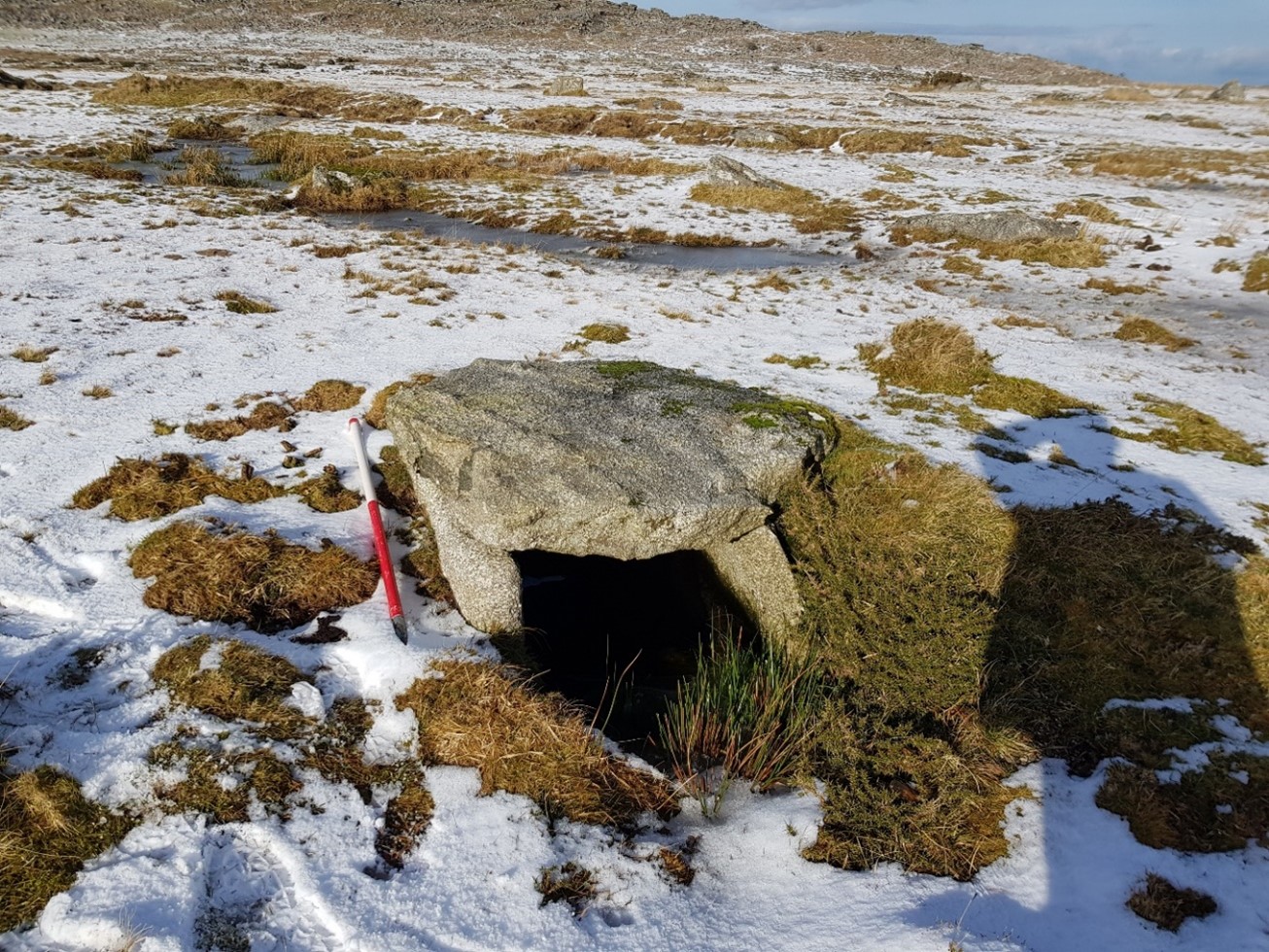
On the granite-strewn moorland between Bearah Tor and Langstone Downs lies a Bronze Age cairn with a cist at its centre. A cairn is a round mound of stones, and a cist is a stone-built burial chamber set into the ground.
This cairn on Bearah Common is about 5 m across and 0.5 m high. It is made of piled stones covered by thick peaty turf, which has probably helped protect it over time. The most visible feature is the cist’s capstone—a nearly circular slab about 1 m wide and 0.15 m thick, with damage around the edges, possibly from an attempt to turn it into a millstone. Beneath it, you can just see the rectangular stone-lined chamber, about 1 m on its longest side.
The careful construction of this cairn and cist shows the respect Bronze Age people had for their dead and may suggest the person buried here was important.
Bearah Common Cist was part of Cornwall National Landscape’s A Monumental Improvement Project, which aimed to ensure that 40 scheduled monuments across Cornwall National Landscape were better protected, identified and enjoyed by a wider range of people. Between 2022 – 2025, the Project delivered conservation repairs, installed new heritage interpretation signage, ran a range of community volunteering events and developed new website resources. The Project was primarily funded thanks to The National Lottery Heritage Fund, with support from our other partners – Cornwall Council, Historic England, The National Trust, Cornwall Heritage Trust and Cornwall Archaeological Society.
This round cairn and cist have not been excavated, but they were probably disturbed in the past. From other similar sites, we know that these burials often contain human remains along with grave goods such as pots, bronze tools, and beads. They are different from older Neolithic burial chambers, which are usually larger and hold the remains of several people, perhaps a family group. These smaller, more carefully built Bronze Age burials suggest that individual identity and status were becoming more important.
This monument lies close to other cairns from the same period and a major linear boundary. Together, they show the mix of ritual activity and land organisation on Bodmin Moor during the Bronze Age.


This simple stone is what’s left of an ancient burial – the top slab of a cist grave, where someone was carefully laid to rest over 4,000 years ago. It might not look like much, but its age makes it very special. The stone has sat here through centuries of wind and weather, now partly hidden by grass and moss. Keeping it safe means letting nature grow gently around it, without disturbing what lies beneath.
Bearah Common is home to hardy grasses, heather and patches of rushes that love the damp ground. In spring and summer, you might spot wildflowers bringing bursts of colour, while bees and butterflies buzz between the blooms. Keep an eye out for skylarks overhead or the occasional rabbit darting through the grass. The quiet, open land is perfect for wildlife that likes to stay out of sight.
Visitors can help by sticking to the paths and not climbing on the stones, as even a small amount of damage can harm this ancient site. Take care not to trample the surrounding plants, which help protect the ground and the buried history beneath. Don’t leave litter and if you’re bringing a dog, keep it under control. Simply enjoying the site with respect helps keep it safe for the future.
Efforts to protect the cairn focus on keeping the site clear of damage from people, animals and weather. Local heritage teams monitor its condition and encourage gentle land use, like low-impact grazing. But it’s tricky being small and remote means it can be easily overlooked or accidentally harmed. Natural wear, overgrowing vegetation and erosion are also ongoing challenges. Looking after such quiet places takes care, attention and support from everyone who visits.
Bearah Common Cist becomes Kist Kemmyndir Kelli in Cornish.
It means Kist – box, kemmyndir – common and kelli grove.
Plan your visit with essential details on transport and parking options, available facilities, route descriptions and accessibility information to ensure a comfortable and enjoyable experience at any of our historical monuments.
When enjoying the countryside, it’s important to follow the Countryside Code to protect nature and preserve its beauty for everyone. This includes simple, respectful actions like not littering always take your rubbish home or dispose of it properly in bins. Stick to designated paths to avoid damaging crops or wildlife habitats, and keep gates and property as you find them, whether open or closed. Be mindful of livestock and wildlife by keeping dogs under control and not disturbing animals. By following these guidelines, you contribute to the protection of the environment and ensure that others can enjoy the countryside as well.
The cairn is on open moorland with no marked paths, so getting there can be tricky. The ground is uneven, often wet and can be boggy in places, especially after rain. It’s not suitable for wheelchairs or buggies and good walking boots are a must. There are no signs or facilities nearby, so visitors need to be confident navigating across rough ground.
There are no facilities at the site. You won’t find signs, paths, toilets or bins, so it’s best to come prepared. The nearest parking and amenities are back near Wardbrook Farm or in the village of Linkinhorne. It’s a quiet, natural spot, so everything you bring in, please take back out with you.
There is no dedicated parking at the site. The nearest option is roadside parking near Wardbrook Farm, around a kilometre to the south. From there, access is on foot across open common land. Be mindful not to block farm entrances or narrow lanes and always park with care and respect for local residents.


You can play a part in preserving its beauty and history for future generations. Volunteering opportunities range from helping with conservation efforts to assisting with educational programmes and community events. Whether you have a passion for nature, history, or simply love the outdoors, there’s a way for you to contribute. Join us and make a difference while connecting with others who share your enthusiasm for Cornwall’s heritage. Contact us to find out more about how you can get involved!

Cornwall National Landscape is a non-profit organisation that conserves the unique landscapes, wildlife, and cultural heritage of Cornwall. Volunteering for the protected landscape provides a rewarding experience of giving back to the community and preserving the Cornwall's natural beauty.

Discover a wealth of knowledge in our Resources section, where you can download detailed research documents, reports, and source material compiled by our archaeology team to enhance your understanding of the site.