12 – Bodmin Moor

Wardbrook Farm Prehistoric Cist

Kist Kynsistorek Trestredhwith

The rectangular arrangement of stones near Wardbrook Farm is the remains of a cist, a type of funerary monument built during the Bronze Age, between 2600 and 800 BC.

Wardbrook Farm Prehistoric Cist

Periods

History

Timeline

Bronze Age 2600-800 BCE

Construction

This Cist was likely built during the Bronze Age, to hold the cremated remains of an important person.

1992

20th Century

Wardbrook Farm Cist was listed as a Scheduled Monument in December 1992, protecting the site for future generations to learn from and enjoy.

Overview

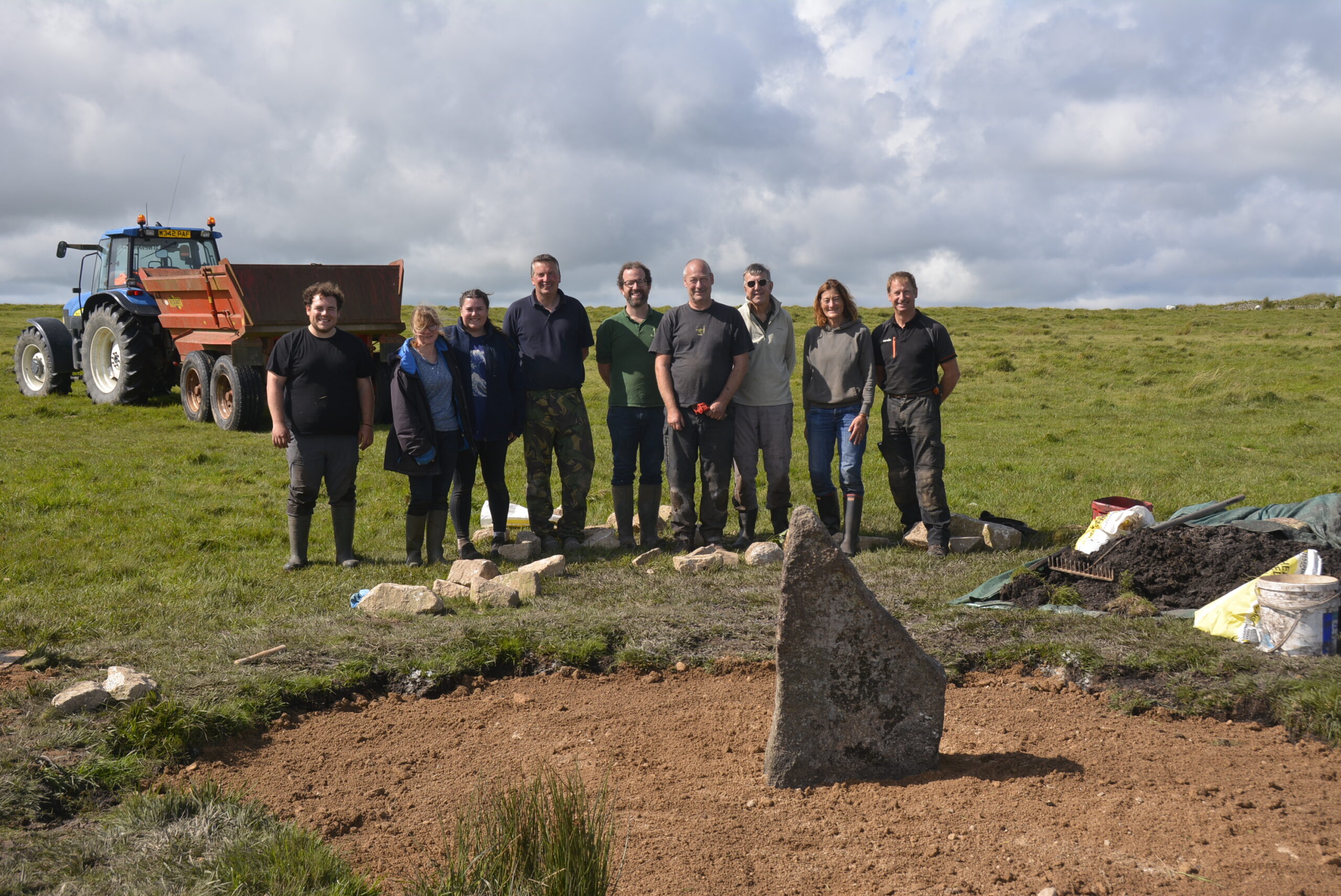
A cist is a funerary monument, consisting of a box-like arrangement of stones in which people would place cremated remains or a body, usually in a crouched position. Cists have been found containing grave goods such as pots, copper or bronze tools and beads. This cist survives as two edge-set slabs protruding through the turf along a boundary line. Conservation repairs carried out in 2024 by A Monumental Improvement Project focussed on removing a fence post from the centre of the monument revealed the probably missing sides and capstone of the monument which have subsided into the marshy gully on the northern side of the fence.

Wardbrook Farm Cist was part of Cornwall National Landscape’s A Monumental Improvement Project, which aimed to ensure that 40 scheduled monuments across Cornwall National Landscape were better protected, identified and enjoyed by a wider range of people. Between 2022 – 2025, the Project delivered conservation repairs, installed new heritage interpretation signage, ran a range of community volunteering events and developed new website resources. The Project was primarily funded thanks to The National Lottery Heritage Fund, with support from our other partners – Cornwall Council, Historic England, The National Trust, Cornwall Heritage Trust and Cornwall Archaeological Society.

Historical Significance

A cist can be free standing or covered by earth and stones to create a cairn or Barrow. The construction of cists in Britain during the Bronze Age marks a shift from the communal or familial group burials of the Neolithic to a focus on single burials in cists. This shift suggests the growing importance of the individual and possibly even family lineages in Bronze Age society.  Cists can be found as part of other monument types such as at the centre of barrows.

Often these cists are part of larger monuments such as barrows, but no trace of the circular mound or ditch has been found at this site.

Visuals

Protect

Wardbrook excavation

Features of Interest

The Wardbrook Farm cist is constructed from large, flat stones once set in a neat rectangle. These were carefully placed to form a stone box, often used for the burial of cremated remains within an urn. Even though the mound that may have once covered it has gone, the cist is still fairly easy to spot on the ground. Its shape, size and open setting help archaeologists learn more about Bronze Age burials and how they changed over time.

Wardbrook Farm Cist 1
Wardbrook Farm Cist 2

Local Flora & Fauna

The area around Wardbrook Farm is full of life, with wildflowers, grasses and mosses growing between the stones and across the open land. You might spot birds like skylarks singing overhead or buzzards gliding in the sky. Rabbits, foxes and even deer sometimes pass through the fields. In spring and summer, bees and butterflies enjoy the flowers, while the peaceful setting makes it a great place to enjoy nature, just like people might have done thousands of years ago.

How Visitors Can Help

You can help protect the Wardbrook Farm cist by treating it with care and respect. Please don’t climb on the stones or move anything, these remains have lasted thousands of years and even small damage can’t be undone. Stick to the paths where possible to avoid harming plants or disturbing wildlife. Taking photos is great, but taking stones or flowers isn’t! By leaving things just as you found them, you help make sure this special place stays safe for others to enjoy and learn from in the future.

Efforts and Challenges

Looking after ancient sites like the Wardbrook Farm cist takes time and care. Weather, farming and even curious visitors can slowly damage the stones or the land around them. Because the cist is out in the open, it’s more at risk from natural wear and tear.

Check out the conservation efforts carried out by the Monumental Improvement team at Wardbrook Farm Prehistoric Cist.

Visit

Directions

Grid Ref: SX 24813 74281

Find with what3words: deodorant.movements.dangerously

Get Directions

Get Involved

Wardbrook Farm’s prehistoric cist is a quiet but important part of Cornwall’s ancient story and you can help look after it. Volunteering opportunities might include supporting conservation work, helping with guided visits, or taking part in local heritage events. Whether you’re interested in archaeology, wildlife, or just enjoy being outdoors there’s a role for you.

teal rip edge bottom

Give a little back by volunteering

Cornwall National Landscape is a non-profit organisation that conserves the unique landscapes, wildlife, and cultural heritage of Cornwall. Volunteering for the protected landscape provides a rewarding experience of giving back to the community and preserving the Cornwall's natural beauty.

teal rip edge bottom

Dig In...

Discover a wealth of knowledge in our Resources section, where you can download detailed research documents, reports, and source material compiled by our archaeology team to enhance your understanding of the site.

top border