What is Natural Beauty?

Areas of Outstanding Natural Beauty are protected landscapes whose distinctive character and natural beauty are so outstanding that it is in the nation’s interest to safeguard them. As such they have been nationally designated by the same legislation as National Parks and have the same status and level of protection.

Cornwall's National Landscape

The 46 Areas of Outstanding Natural Beauty (AONB) in England, Wales and Northern Ireland cover approximately 1/8th of the land surface.

The distinctive character and natural beauty of AONBs make them some of the most special and cherished places in England. AONBs are living, working landscapes that contribute some £16bn every year to the national economy. Although home to less than half a million people (under 2% of England’s population), over two thirds of England’s population live within half an hour’s drive of an AONB and around 150 million people visit English AONBs every year, spending in excess of £2bn.

Together with National Parks, AONBs represent our most outstanding landscapes; unique and irreplaceable national assets, each with such distinctive character, natural beauty and cultural heritage that they are recognised internationally as part of the global Protected Areas Family. AONBs in particular, as ‘working’ landscapes, lead the way in pioneering new approaches to integrated countryside management based on voluntary partnerships engaging and working with local communities to secure common goals.

International Context

AONBs are ‘Protected Landscapes’ – along with UK National Parks – in the world scale of landscape and environmental protection.

Our AONB is part of a global family of 6,555 protected areas, covering 12% of the earth’s surface. These are overseen by the World Commission on Protected Areas (WCPA) adminstered by the International Union for Conservation of Nature (IUCN). The IUCN has defined a series of six protected area managment categories and all AONBs in the UK as defined as Categeory V protected landscapes. A protected area where the interaction of people and nature over time has produced an area of distinct character with significant ecological, biological, cultural and scenic value: and where safeguarding the integrity of this interaction is vital to protecting and sustaining the area and its associated nature conservation and other values.

In contrast AONBs are living and working landscapes where human activities are part of everyday life; villages thrive, the land is farmed, foresters are active, and people enjoy all aspects of the countryside.

European Context

The European Landscape Convention – also known as the Florence Convention, – promotes the protection, management and planning of European landscapes and organises European co-operation on landscape issues.

The Convention has defined Landscape as “an area, as perceived by people, whose character is the result of the action and interaction of natural and/or human factors”.

This landscape convention builds upon earlier European Conventions, aimed at conserving wildlife and protecting architectural and archaeological heritage, and the Rio Convention on biological diversity. It starts from the fundamental acknowledgement:

Black headed mining bee

“that the landscape is an important part of the quality of life for people everywhere: in urban areas and the countryside, in degraded areas as well as in areas of high quality, in areas recognised as being of outstanding beauty as well as everyday areas”

Landscapes Review: National Parks & AONBs – Glover

In May 2018, Secretary of State at Defra, Michael Gove, commissioned a panel of experts led by Julian Glover to make recommendations on the future of Designated Landscapes (National Parks and Areas of Outstanding Natural Beauty) in England.

Announcing the Review, which formed part of the Government’s work to implement its 25 Year Environment Plan, the Secretary of State said:

Each of the focused areas have several recommended proposals.

AONB representatives have strived to support Defra to develop an ambitious government response to the Glover Review, while also responding to the opportunities and challenges presented by the Covid pandemic, addressing the need to connect more people with nature, and to urgently reverse declines in nature and tackle the effects of climate change. The Government responded to the Glover Review in January 2022, with a focus on nature recovery, building climate resilience and engaging people. Public consultation on the response is open for comment until April 2022.

The Government plans to publish a Green Paper for public consultation in 2022.

“Amid a growing population, changes in technology, and a decline in certain habitats, the time is right for us to look afresh at these landscapes. We want to make sure they are not only conserved, but enhanced for the next generation.”

The review focused on 5 key areas:

  1. Landscapes alive for nature and beauty
  2. Landscapes for everyone
  3. Living in landscapes
  4. More special places
  5. New ways of working

The Meaning of Natural Beauty

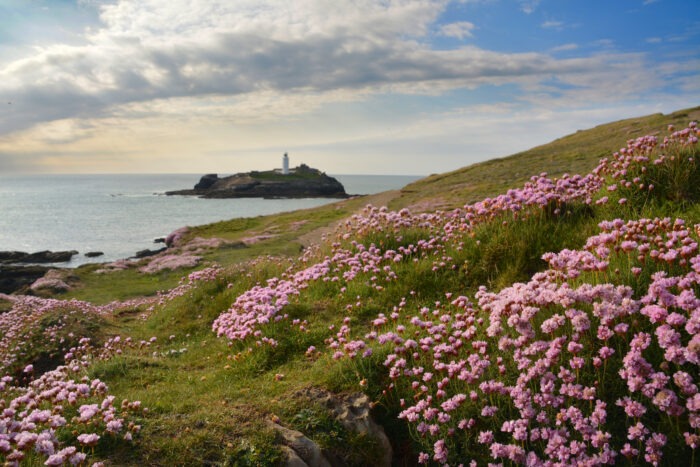
Natural beauty goes well beyond scenic or aesthetic value. The natural beauty of an AONB is to do with the relationship between people and place. It encompasses everything – ‘natural’ and cultural – that makes an area distinctive. It includes the area’s geology and landform, its climate and soils, its wildlife and ecology.

It includes the rich history of human settlement and land use over the centuries, its archaeology and buildings, its cultural associations, and the people who live in it, past and present.

The Meaning of Natural Beauty
Milky Way rising over Kynance Covetars – Kat Lawman
Designated in 1959

Cornwall AONB was designated in 1959 and is unique because it’s made up of 12 separate geographical sections but is still one single designation.

One-third of Cornwall

It covers approximately one-third of Cornwall – an area of 958 sq. km (370 square miles)

9th largest protected landscape

Cornwall AONB is the 9th largest protected landscape in the country.

The Colchester Declaration 2019

Set against a backdrop of unprecedented concern for the future of the natural world and intergovernmental reports that the current global response to the effects of human impact on nature is insufficient, the National Association for Areas of Outstanding Natural Beauty believes that now is the time to significantly increase the scale and pace of nature conservation activity in AONBs. Using our unique network and local partnership model, we are making a collective Declaration on Nature in AONBs, setting out our strategy for change.

Cornwall AONB’s host authority Cornwall Council has declared a climate and ecological emergency and Cornwall AONB are supportive and demonstrating readiness to work collaboratively to redress declines in nature within the context of a wider response to climate change.

The Colchester Declaration 2019
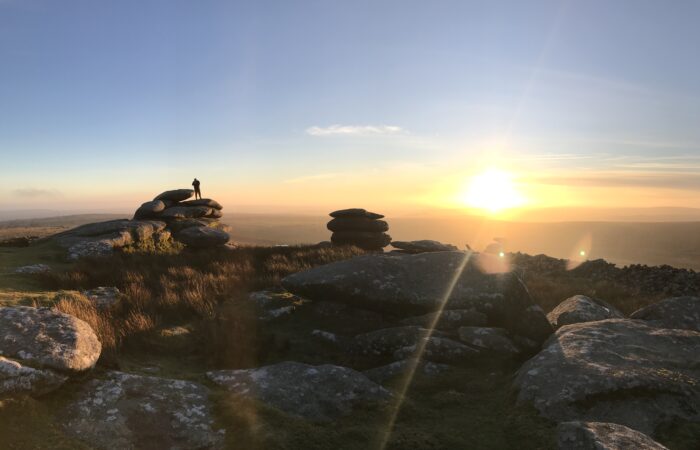
A – Bodmin landscape and ruins

Section Special Qualities

The special qualities of the Cornwall AONB Landscape

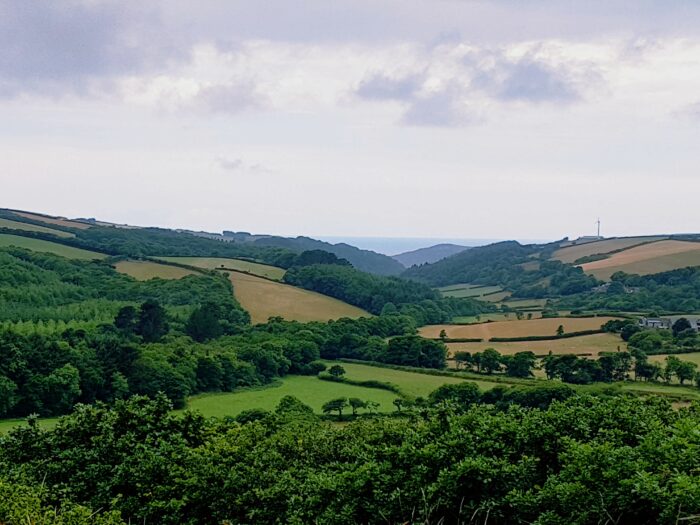
View the special qualities and key landscape characteristics of each of the 12 Local Sections of the AONB
Section

Section

Section

Section

Section

Section

Section

Section

Section

Section

Section

Section