The Cornish Hedge

The earliest Cornish Hedges are understood to be over 4,000 years old, making them one of the oldest human-made structures still used for their original purpose. They are as old as the Egyptian pyramids. They are neither a hedgerow or a dry stone wall, they are uniquely different and only found in Cornwall.

The contribution Cornish Hedges can make to Ecosystem Services

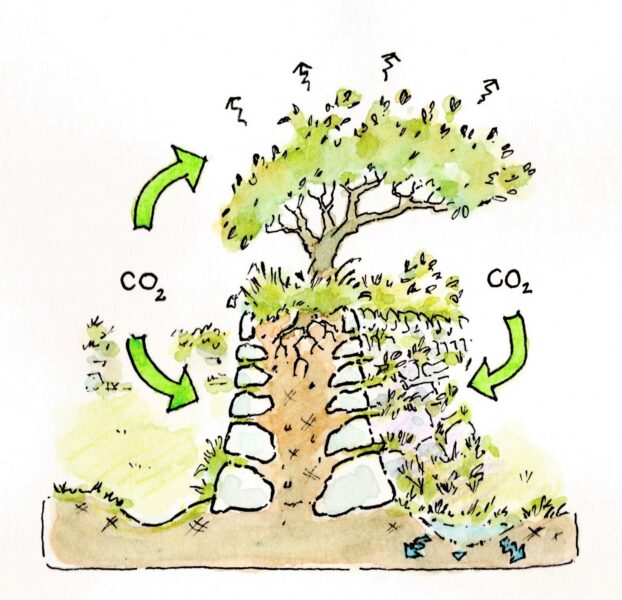
Role in Reducing Impacts of Climate Change

  • Carbon storage
  • Water absorption
  • Improved air quality
  • Soil retention
  • Evaporation

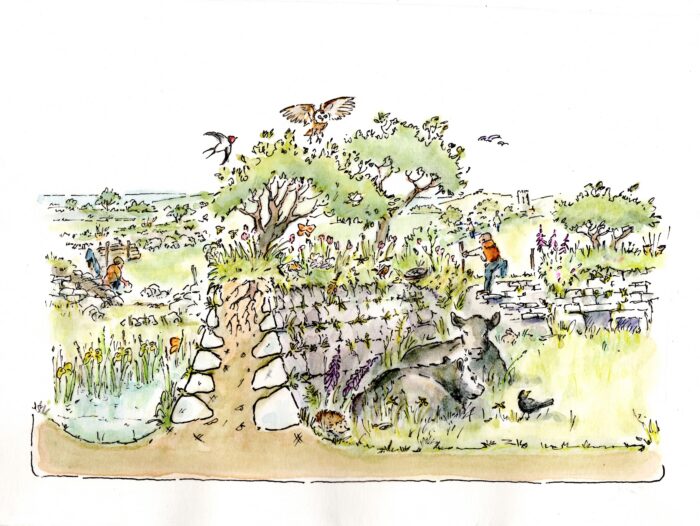
Role in Nature Recovery

  • Wildlife pathways connecting wildlife rich habitats
  • Pollination services for crops
  • Natural pest control
  • Wildlife food and refuge
  • Seed bank

Role in Farmland Management

  • Shelter
  • Shade
  • Livestock management
  • Forage
  • Barrier to spray drift
  • Natural Pest Contro

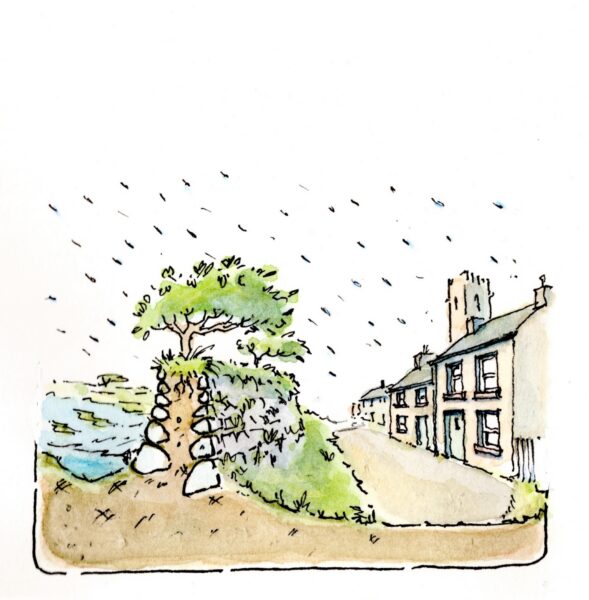
Role in Natural Flood Management

  • Channelling flood water
  • Reducing soil loss
  • Helping to reduce flood risk to properties
  • Improving water quality
  • Retention of flood water
  • Improving resilience to climate change

The Cornish Hedge is of great importance to people, place, nature and climate.

The Cornish Hedge is abundant across the protected landscape and connects the disparate and diverse AONB sections with other areas of Cornwall. It is the thread that connects us – to landscape, heritage, culture and biodiversity. Their contribution to a sense of place, to natural beauty and local distinctiveness, character and heritage is as yet unquantified. However we instinctively know the Cornish Hedge is of great importance to people, place nature and climate.

Detail of back of Drolla - The Storytelling Bench showing Cornish Hedge

The Cornish Hedge is abundant across the protected landscape and connects the disparate and diverse AONB sections with other areas of Cornwall. It is the thread that connects us – to landscape, heritage, culture and biodiversity. Their contribution to a sense of place, to natural beauty and local distinctiveness, character and heritage is as yet unquantified. However we instinctively know the Cornish Hedge is of great importance to people, place nature and climate.

Valuing its Natural Capital and ecosystem services links the past with the present, historic farming with the future of farming.

The contribution of a Cornish Hedge in our landscape is largely unrecognised, the benefits they deliver when managed in good condition could significantly contribute to our climate and ecosystem recovery. There is a lack of available scientific evidence to capture its contribution to specific services and thus accurately describe their economic value in our landscape.

Over the next management plan period Cornwall AONB will support the Cornish Hedge Group to develop knowledge and increase understanding of the role of the Cornish Hedge, helping to educate and promote the opportunities and benefits the Cornish Hedge brings to landowners, farmers and local communities.

The aspiration is to raise awareness of the importance of the Cornish Hedge locally and nationally, and aim to use the knowledge to help inform national decisions regarding future farming schemes and to be acknowledged as a fundamental part of the County’s Nature Recovery Network.

The Value of a Cornish Hedge

  • Carbon storage
  • Improved air quality
  • Improved water quality
  • Historical and cultural importance
  • Sense of place and regional styles
  • Traditional skills
  • Access and health and wellbeing
  • Field boundaries: The backbone of our landscape
  • Windbreaks that offer crop protection and reduce soil loss
  • Livestock shelter, shade and forage
  • Livestock management
  • Wood fuel / foraging
  • Wildlife (Flora & Fauna) corridors
  • Improved biodiversity
  • Natural Pest control.
  • Pollination services
  • Channelling flood water and water absorption

Invest in Cornwall’s landscape

We’re asking businesses across Cornwall, to help restore hedges, habitats, and heritage skills.

By funding new Cornish hedges, your business helps restore nature, preserve heritage skills and rebuild the habitat corridors wildlife urgently needs, all while safeguarding an iconic part of Cornwall’s identity.

Hedges give a sense of place: local distinctiveness tied to cultural heritage

Granite

Bodmin Moor regional style Cornwall AONB Section 12, with Goose holes

Slate

Jack and Jill or Kersey Way style Cornwall AONB: Section 2. Ex. Dannonchapel

Granite Large grounders

Bodmin Moor / West Penwith regional style Cornwall AONB Section 12 + 7

Slate Pitched

Cornwall AONB: Section 9: Lamorran, Roseland

People

People

Communities in the Cornwall AONB live entirely outside the main towns, within villages, hamlets and scattered farmsteads, dispersed throughout the landscape.
Place

Place

The Cornwall AONB is unique and special. The beauty and character of the AONB is primarily owed to the stewardship of generations of farmers and landowners.
Nature

Nature

Set against a backdrop of unprecedented concern for the future of the natural world and ecological crisis, and intergovernmental reports that the current global response to the effects of human impact on nature is insufficient.

Climate

Climate

The climate emergency is the defining challenge of our time. In January 2019, Cornwall Council declared a climate emergency, recognising the need for urgent action to address the climate crisis.