Monitoring & Evidence
Our objectives can be achieved through various means such as but not...
View page
Discover the team our mandate and everything we stand for.
Monitoring & Evidence
Our objectives can be achieved through various means such as but not...
View pageOur Vision
The special qualities of the Cornwall AONB are conserved, enhanced and appreciated...
View pageThe Management Plan
The Management Plan is a shared strategy for those who live, work...
View pageThe Management Plan review
This is the first of two consultation and we invite you all...
View pageWhat is Natural Beauty?
Areas of Outstanding Natural Beauty are protected landscapes whose distinctive character and...
View pageThrough effective Partnership working the protected landscape plays a crucial role in nature recovery, resilience to climate change and conservation of the historic and natural environment, by consideration of four key priorities
Priority-Climate
The climate emergency is the defining challenge of our time. In January...
View pagePriority-Nature
Set against a backdrop of unprecedented concern for the future of the...
View pagePriority-People
Communities in the Cornwall AONB live entirely outside the main towns, within...
View pagePriority-Place
The Cornwall AONB is unique and special. The beauty and character of...
View pageThe hub for partners, stakeholders and strategic organisations engaged with Cornwall National Landscape.
Executive Board & Governance
The Cornwall AONB is governed by a partnership of 20 organisations
View pageFunders and Project Partners
The role of our funding partners.
View pagePartners & Organisations Directory
The organisations supporting Cornwall National Landscape.
View pageStakeholder Strategies
We work to influence the shape of forthcoming strategies.
View pageStrategy for Cornwall National Landscape
The Cornwall AONB Strategy in the context of international, national, regional and...
View pageOur role is to provide Planning, and related, consultations; Consultations on Local Plans and Neighbourhood Development Plans and Pre-application consultations made to Cornwall National Landscape.
Agriculture & Farming Transition
Supporting farmers to achieve a sustainable and profitable farm business and deliver...
View pageDevelopment Pressures
The statutory purpose of the designation is to conserve and enhance the...
View pageLandscape-led development
Development within and affecting the Cornwall AONB, should be ‘landscape-led’.
View pageNature Recovery & Environment Act
Local Nature Recovery Strategies (LNRS) are plans for supporting nature in local...
View pagePlanning Responses
The responses we gave to planning matters inside any of our the...
View pageThe Cornwall Local Plan
The Cornwall Local Plan contains policies both specific to the designated landscape...
View pageWe are committed to supporting farmers to achieve a sustainable and profitable farm business and deliver outcomes for people, place, nature and climate.
Welcome the Community Hub for Cornwall National Landscape.
Discover the team our mandate and everything we stand for.
Monitoring & Evidence
Our objectives can be achieved through various means such as but not limited to, projects, collaborative...
View pageOur Vision
The special qualities of the Cornwall AONB are conserved, enhanced and appreciated by all who live,...
View pageThe Management Plan
The Management Plan is a shared strategy for those who live, work and visit the Cornwall...
View pageThe Management Plan review
This is the first of two consultation and we invite you all to complete the one...
View pageWhat is Natural Beauty?
Areas of Outstanding Natural Beauty are protected landscapes whose distinctive character and natural beauty are so...
View pageThrough effective Partnership working the protected landscape plays a crucial role in nature recovery, resilience to climate change and conservation of the historic and natural environment, by consideration of four key priorities
Priority-Climate
The climate emergency is the defining challenge of our time. In January 2019, Cornwall Council declared...
View pagePriority-Nature
Set against a backdrop of unprecedented concern for the future of the natural world and ecological...
View pagePriority-People
Communities in the Cornwall AONB live entirely outside the main towns, within villages, hamlets and scattered...
View pagePriority-Place
The Cornwall AONB is unique and special. The beauty and character of the AONB is primarily...
View pageThe hub for partners, stakeholders and strategic organisations engaged with Cornwall National Landscape.
Executive Board & Governance
The Cornwall AONB is governed by a partnership of 20 organisations
View pageFunders and Project Partners
The role of our funding partners.
View pagePartners & Organisations Directory
The organisations supporting Cornwall National Landscape.
View pageStakeholder Strategies
We work to influence the shape of forthcoming strategies.
View pageStrategy for Cornwall National Landscape
The Cornwall AONB Strategy in the context of international, national, regional and local priorities and goals.
View pageOur role is to provide Planning, and related, consultations; Consultations on Local Plans and Neighbourhood Development Plans and Pre-application consultations made to Cornwall National Landscape.
Agriculture & Farming Transition
Supporting farmers to achieve a sustainable and profitable farm business and deliver outcomes for people, place,...
View pageDevelopment Pressures
The statutory purpose of the designation is to conserve and enhance the natural beauty of the...
View pageLandscape-led development
Development within and affecting the Cornwall AONB, should be ‘landscape-led’.
View pageNature Recovery & Environment Act
Local Nature Recovery Strategies (LNRS) are plans for supporting nature in local areas.
View pagePlanning Responses
The responses we gave to planning matters inside any of our the areas inside the Cornwall...
View pageThe Cornwall Local Plan
The Cornwall Local Plan contains policies both specific to the designated landscape and also wider policies...
View pageWe are committed to supporting farmers to achieve a sustainable and profitable farm business and deliver outcomes for people, place, nature and climate.
Welcome the Community Hub for Cornwall National Landscape.
27 August 2026 · News
Brief for consideration Context Cornish hedges are among Cornwall’s most distinctive cultural and historic assets. Dating back over 3,500 yrs old, they represent one...
Melodie Manners

The Etched in Nature Project was delivered to enhance visitors’ understanding of the area’s rich natural and cultural heritage. The project combined creative interpretation, community involvement and conservation awareness to help people connect with one of Bodmin Moor’s most treasured landscapes. Through a series of artistic installations, volunteer activities and guided walks, the project celebrated the reserve’s mining history, woodland heritage and internationally important temperate rainforest habitats.
The project introduced a series of permanent interpretation features across the reserve. A bespoke oak bench, etched with artwork inspired by the history of Wheal Victoria mine and traditional charcoal production, was installed along the leat path near historic mining features, providing both a place to rest and an opportunity to learn about the area’s industrial past.
Two entrance posts featuring etched illustrations of local woodland species were installed to welcome visitors and highlight the biodiversity of Golitha Falls. In addition, two fixed-point photographic monitoring posts were created with designs inspired by temperate rainforest species such as mosses, lichens and liverworts. These features encouraged visitors to engage with the reserve’s unique ecology while supporting long-term environmental monitoring.
Community volunteer sessions were held to support the installation of the new features. These practical events enabled local people to develop new skills, contribute directly to the nature reserve and gain a stronger connection to the landscape. A programme of guided walks, led by local history and ecology specialists, explored both the cultural heritage and wildlife of Golitha Falls, helping visitors discover the stories and species that make the site special.
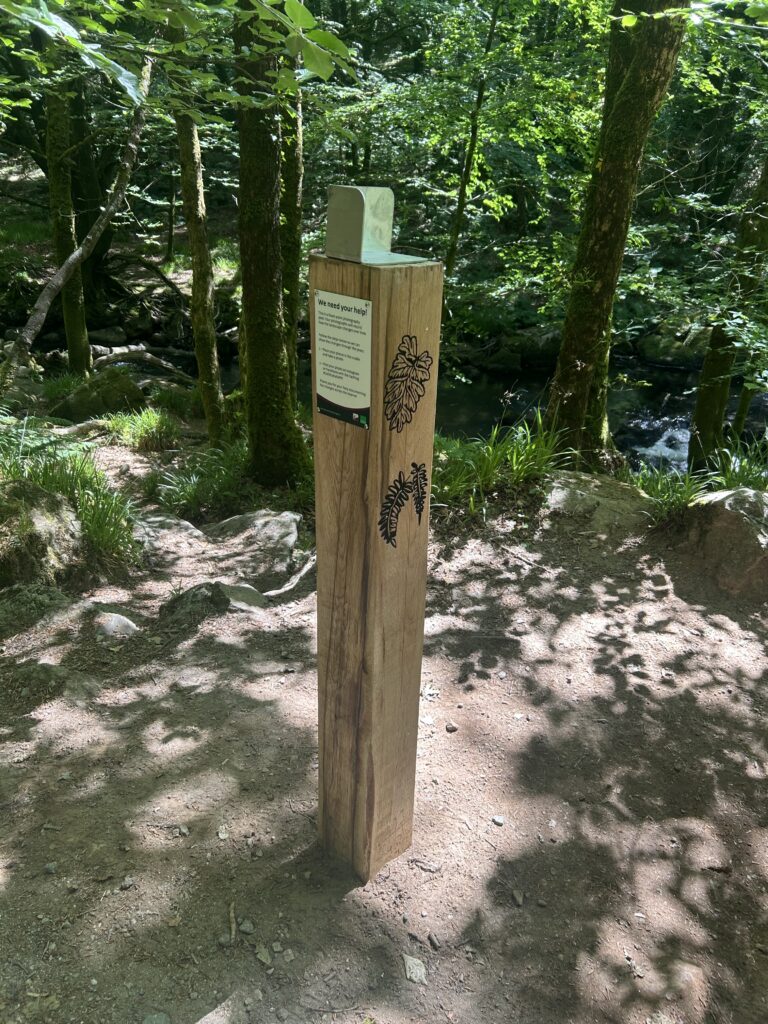
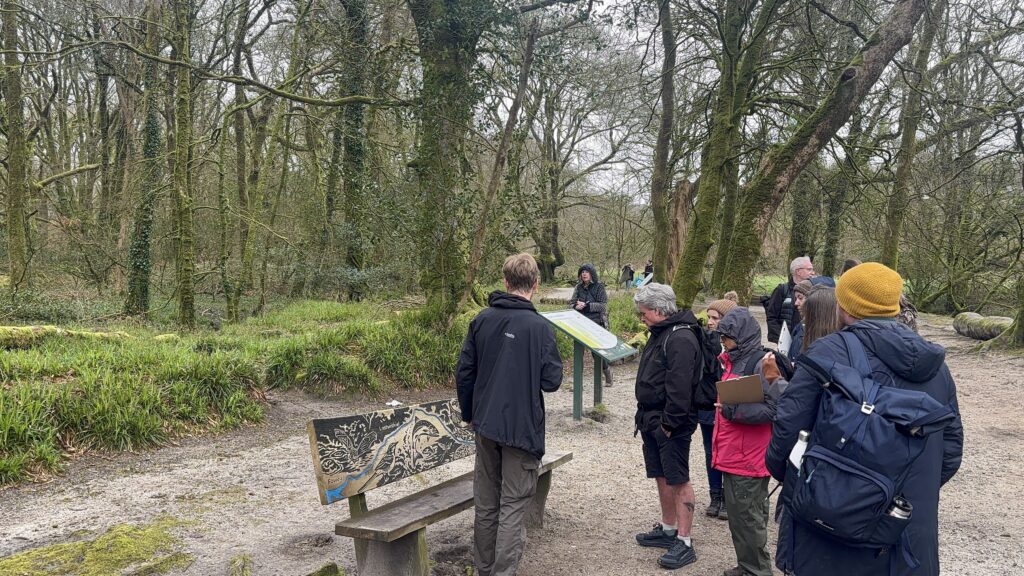
The project improved access to and understanding of Bodmin Moor’s natural and cultural heritage through engaging and durable interpretation features. Visitors gained greater insight into the site’s industrial history, including mining and charcoal production, while also learning about the importance of temperate rainforest habitats and their rare species.
The volunteer programme provided new opportunities for local people to become involved in conservation and heritage activities, helping to strengthen community ownership of the reserve. Guided walks and practical sessions increased engagement with the landscape and encouraged more people to explore Golitha Falls responsibly and sustainably.
The installation of the photographic monitoring posts also supported citizen science, enabling visitors and volunteers to contribute to the long-term monitoring of bryophyte and rainforest habitats. This created an ongoing link between public engagement and conservation management.
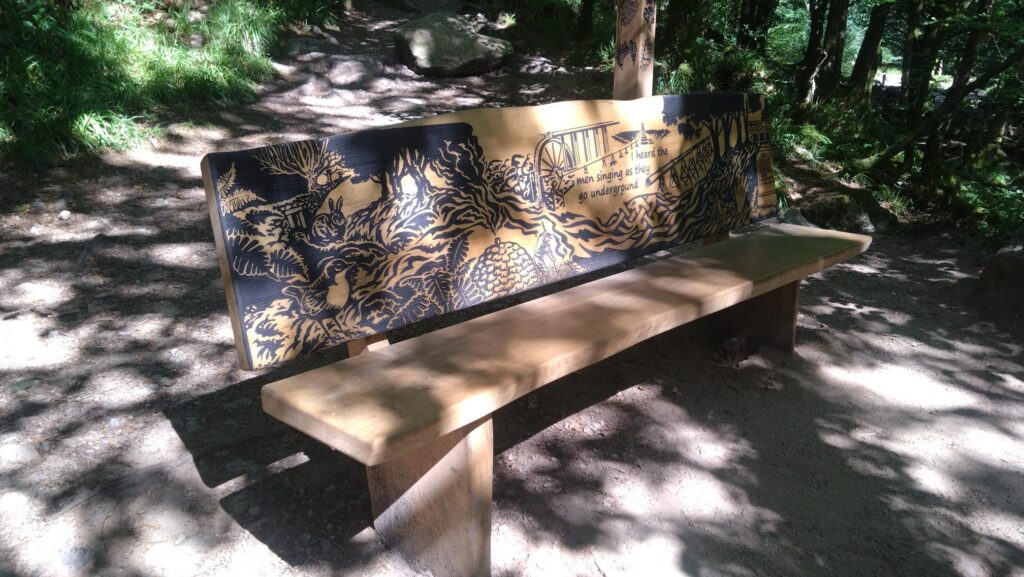
The Etched in Nature project successfully combined art, heritage, community participation and nature conservation to create a richer visitor experience at Golitha Falls National Nature Reserve. By investing in high-quality interpretation features and involving local people in their creation, the project helped bring the stories of the landscape to life while deepening understanding of Bodmin Moor’s unique heritage and wildlife.
The legacy of the project continues through its permanent installations, ongoing volunteer involvement and opportunities for citizen science. Together, these elements have helped ensure that visitors can continue to learn about, appreciate and care for this special place for years to come.