Monitoring & Evidence
Our objectives can be achieved through various means such as but not...
View page

Communities in the Cornwall AONB live entirely outside the main towns, within villages, hamlets and scattered farmsteads, dispersed throughout the landscape.


It’s a mixed picture for communities in the AONB with areas of extreme wealth and also extreme deprivation.

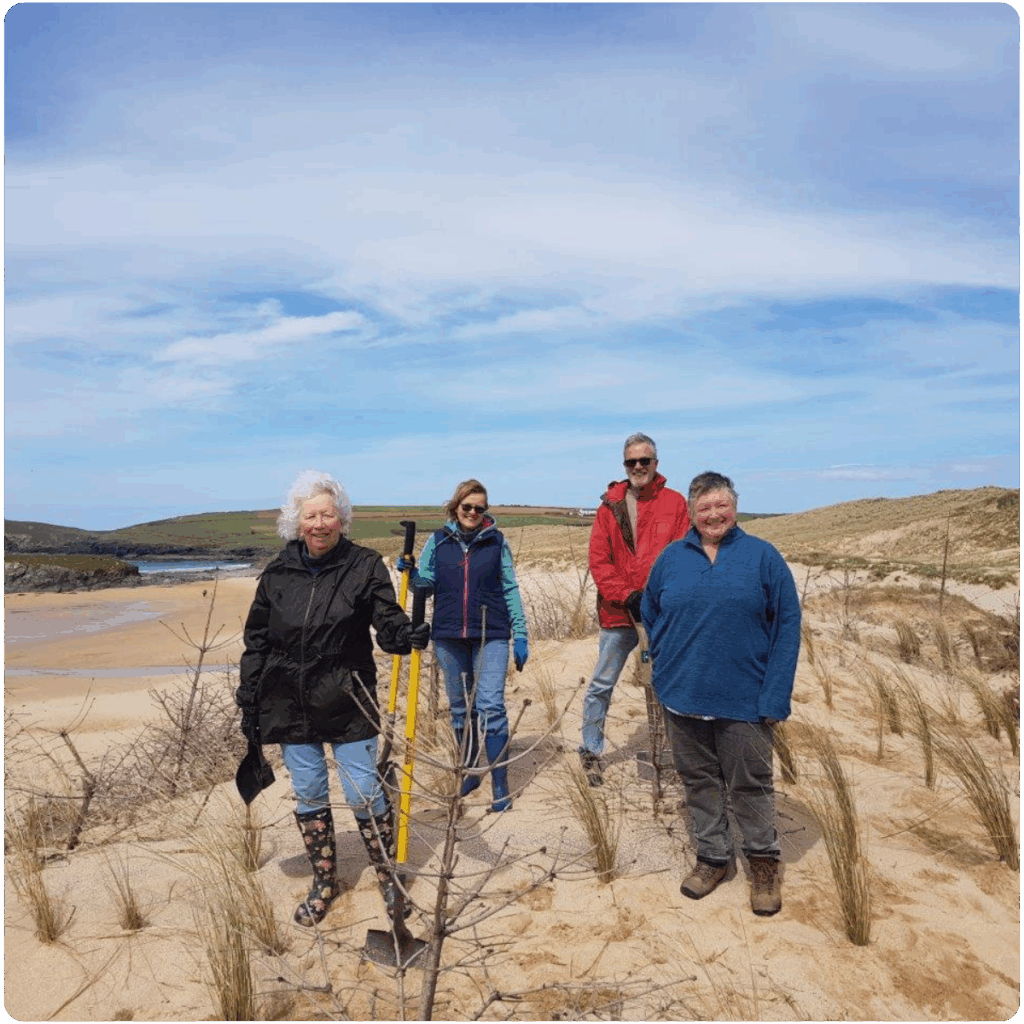
Being connected to nature in the Cornwall Area of Outstanding Natural Beauty lifts our hearts and spirits, we feel better when we are engaged with the landscape around us.
Connect people with the landscape, wellbeing, and access.
Access, both physical and digital, promotes mental health and wellbeing, connecting people with nature and removing all barriers (physical and cultural) to experiencing, and appreciating the protected landscape.
To create links between the 12 separate sections and demonstrate the diverse landscapes while connecting a greater range of people with nature and the protected landscape, promoting inclusive and innovative access for all.
Increase access to the Cornwall National landscape to improve levels of physical activity, health and wellbeing. Promote increased mental health through volunteering and projects which connect people to nature, decrease health inequalities and social isolation
Objectives can be achieved through various means such as but not limited to, projects, collaborative working groups, communications and engagement. These will be reviewed and monitored during Partnership Meetings throughout the year.
The Key Performance Indicator (KPI) data will be collected and reported annually to the Partnership via the annual report. This information will be reviewed each year and aid in understanding the performance of the AONB.
These indicators are structured under themes listed below which align with the aims of the AONB Management Plan.
Number of volunteers
180
Attendance at events convened/organised by AONB Teams
4400
Number of young people (under 18 years) engaged with
120
Number of partnerships where the AONB Team is part of the project/team/steering group lead
8

Number of partnerships where the AONB Team is a supporting partner
12
Value (£) of externally funded projects substantially influenced / generated by the AONB Team
684,000


Value of volunteer days: professional skills £150, SemiProfessional £100, Unskilled £50
150,000
Cornwall AONB – Project Delivery 2022 – 2027

This is a landmark project bringing together all 12 sections of Cornwall National Landscape. Our aim is to strengthen the living connections between people, place, nature and climate so that Cornwall’s landscapes can thrive for generations to come.
To connect people, place, nature, and climate through digital innovation, amplifying voices and protecting Cornwall’s natural and cultural heritage.

Bring together the people of Bodmin, Liskeard, Launceston and surrounding areas with the farmers of Bodmin Moor to explore and celebrate the rich nature, history and traditions that connect them.
By working together we can protect this special landscape for wildlife, for the climate and for future generations to enjoy.

Under a pitch black starry sky in West Penwith, when sitting by some of the ancient monuments, we are looking at the very sky that 2000 years or more ago our ancestors were looking at. We must protect that sky for future generations….
Preserve and enhance the dark night skies above West Penwith and Bodmin Moor for pleasure, leisure and to support the wellbeing of residents, visitors and wildlife.

Representing 6,000 years of Cornish history
This five-year project sought to ensure that the 40 Scheduled Monuments in the Cornwall National Landscape were better identified, supported and enjoyed by a wide range of people.

Follow Drolla on it’s journey across the 12 sections of Cornwall National Landscape, inviting residents and visitors alike to pause, reflect and reconnect with local identity, folklore and the healing power of nature.
Deliver a project which uses nature and the arts to increase access to the protected landscape and improve wellbeing.
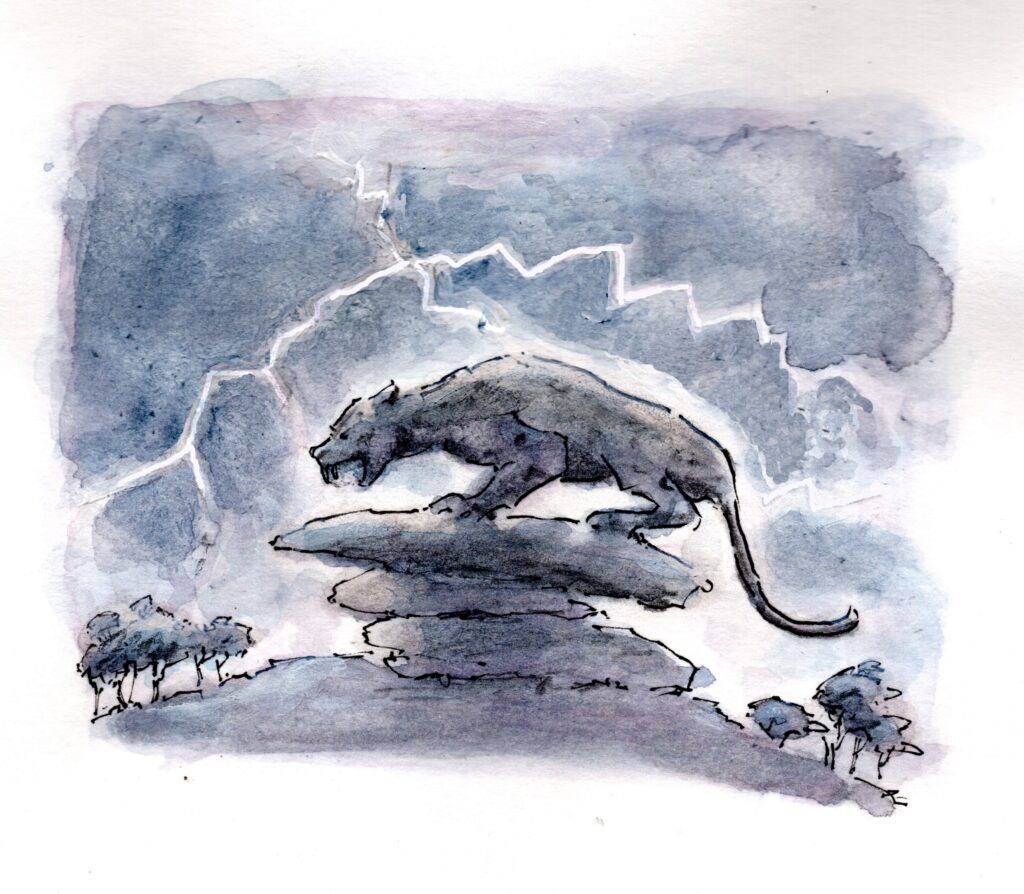
The BEAST (Bodmin Environment Arts Science Theatre) project was an innovative initiative by Cornwall National Landscape designed to connect communities with nature through art and cultural experiences. Rooted in the…
Research shows and the Covid 19 pandemic has highlighted that connection to nature promotes positive mental health and wellbeing. The Cornwall AONB will align with the 5 Ways to Wellbeing.
These include:
1. Connect: Talk and listen, be there, be connected
2. Be Active: Do what you can, enjoy what you do, move your mood
3. Take Notice: Remember the simple things that give you joy
4. Keep Learning: Embrace new experiences, see opportunities, surprise yourself
5. Give: Your time, your words, your presence
Priority
Aim
Increase access to the AONB landscape to improve levels of physical activity, health and wellbeing. Promote increased mental health through volunteering and projects which connect people to nature, decrease health inequalities and social isolation.
Provide for physical activity and volunteering opportunities within the AONB that will enhance landscape, biodiversity, heritage and access whilst improving people’s health and wellbeing and addressing health inequalities.
Timeframe: Medium
Seek to deliver outcomes within the current Health and Wellbeing Strategy relevant to the protected landscape, particularly around the following outcomes: helping people to live longer, happier and healthier lives, and improving the quality of life.
Encourage a wider range of people to use the AONB landscape and seascape for health and wellbeing benefits, within and outside the AONB, specifically targeting areas in the AONB with the capacity and infrastructure to accommodate recreational activity and not those areas particularly sensitive to disturbance.
Timeframe: Long
Utilise the beauty of the AONB as a tool to inspire people to explore the AONB for health, leisure and recreation.
Provided that this does not impact upon the qualifying features of the SAC or SPA from recreational disturbance.
Timeframe: Long
Seek alternative modes of funding for the management of access and the provision of recreation for healthy activities and enjoyment of the countryside, particularly accessing mainstream health budgets as the focus moves from one of cure to one of prevention.
Timeframe: Medium
Understand the value of the natural capital of the AONB to health, and the connection between landscape and wellbeing. Seek appropriate investment in the AONB’s natural capital, to benefit long term health and wellbeing of communities and visitors.
Timeframe: Long
Improve access to locally produced and affordable healthy food and increase opportunities for people and communities to grow their own, supporting a high-quality environment and healthy communities.
Timeframe: Long
Cornwall’s culture and heritage, like the derivation of the word, springs from the soil, rooted in landscape – a product of place and people’s perception and experience of place. Cornwall’s distinctive culture and heritage connects people to landscape and must b
nurtured, cherished, supported and celebrated. Cornwall’s history is internationally important. A significant part of Cornwall is designated as a UNESCO World Heritage Site – a wealth of historic assets, settlements, buildings, monuments, structures and archaeology. This rich historic landscape is still readable from prehistory, through the medieval period and into the mining era. The heritage of Cornwall contributes strongly to the economy and could be seen as being the social and cultural capital of Cornwall in addition to its natural capital. Connect people to nature and heritage through the arts and culture. There are increasing threats to the AONB’s heritage assets, both to the distinctive heritage character of landscapes, hamlets and villages and to historic buildings through loss and impact of insensitive development.
Priority
Aim
Raise awareness, improve understanding and educate people about Cornish culture and the rich cultural history and heritage assets within Cornwall AONB. Heritage features identified as ‘at risk and vulnerable’ will be brought into better management. Improve recognition and conservation of the heritage character of the Cornwall AONB landscapes, historic buildings and assets for the benefit of current and future generations, recognising their value to creating a ‘sense of place’, and to the local distinctiveness of individual sections.
Support initiatives to reduce and address heritage at risk within the Cornwall AONB including sensitive and appropriate conservation and management of heritage assets.
Support the recognition of the value of heritage landscapes, and of historic buildings and features as an irreplaceable resource, shaping the distinctiveness and character of Cornwall’s AONB landscapes. Improve the understanding of the historic narrative that heritage landscapes and assets tell us about the AONB, communities and Cornish culture.
Support physical and intellectual access to the historic environment within the AONB.
Timeframe: Short
Support the work of the Cornwall and West Devon Mining World Heritage Site (WHS) Partnership in the management, interpretation and celebration of the mining heritage of the AONB. Contribute to the actions set down in the WHS Management Plan and World Heritage Site Supplementary Planning Document (2017).
Timeframe: Long
Connect people to nature and heritage through the arts and culture. Support the current cultural sectors of creative arts, performance and media that celebrate and enhance the character of the protected landscape.
Timeframe: Short
Support the celebration of the cultural distinctiveness of the protected landscape.
Timeframe: Short
Promote the use of the Cornish language both spoken and written and wherever possible and practical use Cornish on interpretive material such as signs within the protected landscape
Timeframe: Medium
Seek to bring Scheduled Monuments in Cornwall AONB into positive management and improving condition.
Timeframe: Short
Support the high-quality management of heritage assets within the protected landscape to ensuring their continued survival in good condition
Timeframe: Long
Promote the cultural importance such as the benefits to people, place, nature and climate of the Cornish Hedge as a heritage asset.
Timeframe: Short
Monitor the extent and condition of historic sites, features and landscapes in the AONB, promoting the use of the existing Historic Environment Record, Cornwall Council Internet mapping and the Heritage at Risk register
Timeframe: Short
Support new designations and inclusions to the HER for heritages assets, as yet unmapped, within the AONB.
Timeframe: Long
Inclusively promote the sensitive interpretation of the AONB’s historic environment.
Timeframe: Short
Understand the value the historic environment and historic assets make to Cornwall’s economy and communities as our heritage capital and ensure appropriate investment.
Timeframe: Long
Develop projects and initiatives to involve local communities in the management of their local historic environment, working with third sector groups and volunteers.
Timeframe: Short
Support the effective management of the Historic Environment with Partners and Stakeholders guided by the latest version of Cornwall’s Heritage Strategy.
Timeframe: Short/Medium
Protect the Outstanding Universal Value and the setting of the Cornwall and West Devon Mining World Heritage Site (WHS) by supporting the actions within the WHS Management Plan.
Timeframe: Long
Support the agreed ‘Joint statement of the Historic Environment in AONBs’ with Historic England, National Association of AONB and individual AONBs to work together to conserve and enhance the historic and cultural environment. The parties will collaborate to further the understanding, conservation, public enjoyment and appreciation of the historic environment in AONBs.
Timeframe: Long
The Cornwall AONB is protected by statutory requirement, planning policy and material considerations which require the conservation and enhancement of the natural beauty of the AONB landscapes. Great weight should be given to conserving the landscape and scenic beauty of the designated landscape which enjoys the same level of protection as a National Park. These policy measures apply to ensure that the characteristics that make the AONB unique and irreplaceable are maintained for future generations. Cornwall Council as the Local Planning Authority has the key role in the long-term care of the AONB landscape through the implementation of these development plan policies and particularly the Cornwall Local Plan and Climate Emergency Development Plan Document.
Priority
Aim
To ensure development conserves and enhances the local distinctiveness and natural beauty of the AONB landscapes and their settings while meeting the needs of local communities. Development within the designated landscape should be demonstrably “landscape-led” to allow it to provide a contextual response to its specific setting within the AONB, clearly addressing locally characteristic forms of development in terms of scale, massing, form, architectural treatments, distinctiveness, respect to local heritage, biodiversity and other key attributes of the local landscapes.
Development should conserve and enhance and feel part of the existing landscape and settlement pattern and form. This can include responding to both built and natural attributes, for instance reflecting vernacular construction methods, built forms, field patterns and landscapes. It may also include retaining or enhancing key views, landscapes and buildings that provide a tangible link to Cornish culture as well as ensuring that local place names and character are understood and form part of the development proposals.
All development within the AONB will be required to adopt a “landscape-led” approach as set out within this document in order to conserve and enhance the natural beauty of the AONB.This approach will provide for the statutory protection of the AONB landscapes and will deliver the policy requirements that stem from this. Development proposals within the AONB landscape will be required to demonstrate a contextual understanding and response to the unique and characteristic attributes of the site and its setting and to demonstrate how the proposed development positively responds to these in conserving and enhancing the designated landscape.
Provided that this does not impact upon the qualifying features of the SAC or SPA from land take or changing land use.
Development management decisions should specifically consider the cumulative effects of individual developments on the designated landscape. The addition of further individual developments and particularly replacement and redevelopment of existing dwellings and buildings and the extension of settlements will be supported where these are landscape led and do not exceed the sensitivity and capacity of their designated landscape setting and where they do not give rise to cumulative effects particularly through the inclusion of uncharacteristic contemporary elements, domestic paraphernalia and light spill. The unique historic character of many of the settlements and clusters of dwellings in the designated landscape reflect both their vernacular form and buildings and also their relationship to their landscape setting. The loss of either characteristic will be disproportionately harmful.
The replacement and redevelopment of existing dwellings will be supported where the overall scale, density, massing, height, layout, materials and landscaping of the development appropriately responds to local character and natural beauty of the surrounding AONB landscape. Such development should be broadly comparable to the size, scale and bulk of the dwelling being replaced, and not adversely affect the character of the surrounding area.
“Major development” should be refused in the Cornwall AONB subject to the tests set out in NPPF para 177. This Management Plan, at Appendix ii, sets out the views of the AONB Partnership as to what should be considered to constitute “major development” in the AONB.
Seek to embed the statutory purposes of the AONB designation and AONB Management Plan policies, and requirement for a landscape-led approach in the all relevant Cornwall Council and other stakeholder plans, policies, strategies and programmes.
Support appropriate characteristic green infrastructure within built development and the wider landscape, where this would follow the required landscape-led approach required for the AONB.
Support small scale developments that enable the identified needs of local people to be met in terms of provision of affordable housing, maintaining and enhancing local community amenities and services. Housing need and affordable housing need within the AONB should be based on robust evidence of local need arising from within the AONB. The extent to which the AONB is required to accommodate objectively assessed needs arising from outside the AONB should be limited. Any such development should be in sustainable locations with good access to services where landscape capacity and opportunity to conserve and enhance the protected landscape can be demonstrated. Exception sites for affordable housing related to any settlement within the AONB should be identified in the light of a “landscape-led” comparative analysis of alternative sites to ensure that only the most appropriate sites are brought forward.
Provided that this does not impact upon the qualifying features of the SAC or SPA from land take or changing land use.
Support new tourism, leisure and recreation development that conserves and enhances the diverse local landscape characteristics of the various sections of the Cornwall AONB. Development of such facilities should respond to the character, sensitivity and capacity of the designated landscape and not comprise a conspicuous uncharacteristic element harming the character, tranquillity and biodiversity of the landscape, ensuring that the scale, design, colour, and use of materials have appropriate regard to the protected landscape. Seek better integration of existing holiday sites, visitor infrastructure, and car parks in order to reduce landscape and visual impact.
Provided that this does not impact upon the qualifying features of the SAC or SPA from recreational disturbance.
Support the sustainable management of recreational water sports, and commercial and operational maritime activities including shell fisheries and dredging in AONB estuaries and at the coast. Recognise the potential harm to tranquillity and biodiversity from both recreational and commercial and operational maritime activity both within the enclosed waters of the designated landscape and also the marine areas which form their setting.
Support measures to conserve and enhance the AONB coast, including safeguarding currently undeveloped coastal stretches. Provided that this does not impact upon the qualifying features of the SAC or SPA from recreational disturbance.
Support appropriate landscape-led site selection and design of new telecommunication and power infrastructure. Require such development to comply with the Code of Best Practice on Mobile Network Development in England (or any successor document).
Any development in, or within the setting of, the AONB must be sustainable development that:
Particular care should be taken to ensure that development outside the AONB does not harm the natural beauty, character and special qualities of the AONB and/ or its setting or otherwise prejudice the achievement of the AONB purposes. The AONB enjoys equal protection from effects whether they result from development within or outside the designated area.
Provided that this does not impact upon the qualifying features of the SAC or SPA from land take or changing land use.
Quarrying and mineral extraction within the AONB or within its setting should conserve and enhance the landscape character and natural beauty of the area. Support the landscape restoration of existing mines and quarries, to enhance landscape character and natural beauty by seeking appropriate new planning conditions through the Review of Mineral Planning Permissions. Support existing small-scale quarries within the different sections of the CAONB, in order to allow controlled production of characteristic stone for use locally to facilitate contextually responsive development. These quarries will be required to respect landscape character, topography and vegetation in their operation and restoration and minimise short- and long-term landscape and visual impacts. Support further measures to protect and enhance environmental and landscape quality when existing quarrying permissions are reviewed.
Provided that this does not impact upon the qualifying features of the SAC or SPA from land take or changing land use.
Support the use of local vernacular stone and other building materials used in vernacular ways within built development and infrastructure. If necessary, by the small-scale and sensitive reworking of local quarries.
Renewable energy technologies and associated infrastructure, both onshore and offshore, should be of a scale and design able to be accommodated within the AONB and its setting. Any such development should adopt landscape led principles to guard against landscape, visual and cumulative impacts, in accordance with the evidence base contained within the local relevant renewable policies.
Provided that this does not impact upon the qualifying features of the SAC or SPA from land take or changing land use.
Built development should provide gains for biodiversity; promoting habitat retention, creation, enhancement and species protection aligned with other relevant policies.
Provided that this does not impact upon the qualifying features of the SAC or SPA from land take or changing land use.
Any development within the marine, coastal and estuarine environment must take account of terrestrial and marine based planning policies and processes.
Provided that this does not impact upon the qualifying features of the SAC or SPA from land take or changing land use.
Farm diversification and infrastructure will generally be supported where they provide sustainable rural businesses, enhance local distinctiveness and cultural heritage and where the development is of a scale, design and location that can be accommodated within the sensitive landscapes of the AONB.
See Appendix i.
The conversion of existing redundant agricultural (and other similar)buildings to form dwellings will only be supported where:
• The existing buildings are characteristic, historic, vernacular buildings which are recognisably an important part of the local built and landscape context; and
• The existing buildings are worthy of retention in their own right; and
• The conversion very substantially retains the scale, character and appearance of the original building with repair generally preferred to renovation; and
• The conversion does not give rise to the introduction of uncharacteristic fenestration or domestication of the setting or the introduction of conspicuous domestic paraphernalia into the setting of the building.
The conversion of redundant existing agricultural (and other) buildings such as pole barns, simple concrete block barns or portal frame buildings which in the absence of an agricultural use would form alien elements in the landscape will not generally be supported.
Avoids impacts upon the qualifying feature of the SAC and SPA from land take or changing land use.
Require the conservation and enhancement of the existing character of the local road network and particularly the minor lanes within the designated landscape. The pattern and character of the roads of much of the designated landscape contributes appreciably to the character of the area, from sunken and enclosed lanes in wooded valleys to open unenclosed moorland roads. Changes to the roads and lanes in the designated landscape require particular design to ensure that their characteristic form is not lost or compromised. Widening, straightening, re-routing, kerbing and enclosure of currently unenclosed sections or the inclusion of uncharacteristic standard suburban details and particularly the proliferation of signage should be avoided. New openings to lanes through existing hedge banks or vegetation which require uncharacteristic contemporary design standards and uncharacteristic visibility splays will not be supported. Where new highway works are required these should adopt traditional approaches including locally appropriate Cornish hedge banks and where appropriate characteristic soft passing places and should reflect characteristic local landscape patterns and boundaries. The management of verges should provide opportunity for biodiversity net gain.
Support the preparation of Neighbourhood Development Plans by Cornwall AONB parishes, in the light of robust landscape evidence bases, promoting the conservation and enhancement of local landscape character and distinctiveness.
Timeframe: Long
Seek opportunities to reduce and remove existing overhead power and telecommunications lines via the Ofgem Undergrounding and other programmes in order to reduce landscape and visual impact.
Where/if the overhead cables are in proximity to a Habitats site that there may be a potential impact pathway through direct land take if the undergrounding route were to transit through the Habitats site. A project-level HRA screening at application stage may therefore be necessary
Timeframe: Long
Promote a pragmatic approach for coastal communities to accommodating the effects of climate change including the relocation of infrastructure and facilities where this is compatible with the primary purpose of the designation and other policy requirements.
Timeframe: Long
Any development should consider the relative carbon balance between the options of new build or refurbishment with a strong preference for the lowest carbon options considering the balance between embedded carbon and operational carbon emissions and preferring low carbon materials and construction methods.
Timeframe: Long
Appropriate, sustainable, access connecting the 12 Sections of the Cornwall AONB is important to achieve the physical linking of people and place. Access, both physical and digital, promotes mental health and wellbeing, connecting people with nature and removing all barriers (physical and cultural) to experiencing, and appreciating, the protected landscape.
Priority
Aim
Create links between the 12 separate sections of Cornwall AONB and demonstrate the diverse landscapes while, connecting a greater range of people with nature and the protected landscape, promoting inclusive and innovative access for all. By encouraging sustainable access, carbon emissions are reduced supporting the Carbon Neutral Cornwall Plan.
Raise the profile of and promote an improved understanding of the complicated geography of the Cornwall AONB. Raise the awareness of the importance of the protected landscape through various means including the sensitive placement of Cornwall AONB signage and highways boundary markers, where this is supported by partners and parishes.
Timeframe: Short/Medium
Support the development of access infrastructure that conserves and where possible enhance the landscape, historic character biodiversity and geodiversity of the AONB and support the proactive de-cluttering of associated modern signage, lighting and furniture.
Seek to improve the sustainable connectivity between population centres and nearby sections of the Cornwall AONB with appropriate green infrastructure that enhances landscape character and increases public health opportunities.
Support new proposals for future coastal access arising from the Marine and Coastal Access Act 2009, ensuring early consultation with landowners. Ensure that any coastal access provision conserves and enhances coastal character, working with landowners.
Provided that this does not impact upon the qualifying features of the SAC or SPA from recreational disturbance.
Support integrated, accessible and sustainable public transport links within and between the Cornwall AONB sections with particular attention given to the provision of rural bus services and water-based transport within AONB estuaries.
Improve traffic management on the coast road between St Just and St Ives (B3306), focusing on the promotion of sustainable modes of travel through West Penwith that encourage people to visit places.
Support the strategic management of open access land and public rights of way within the AONB with the full involvement of landowners to ensure good condition and connectivity, whilst guarding against wildlife and social impacts.
Timeframe: Long
Support partners in maintaining footpaths and bridleways in good condition, including the South West Coast Path, circular routes, cross county trails and connections to AONB settlements.
Timeframe: Short/Medium
Increase the access to, and interpretation of, important areas for biodiversity, geodiversity and/or heritage where appropriate, provided that this can be achieved without damage to or disturbance of these assets or unacceptable landscape and visual impact.
Provided that this does not impact upon the qualifying features of the SAC or SPA from recreational disturbance.
Timeframe: Short/Medium
Secure gains for landscape, heritage and nature from transport and highways infrastructure projects, promoting the effective use of the Cornwall Rural Highways Best Practice Guide.
Timeframe: Long
Create opportunities for new, long term programmes to increase diversity of visitors in the Cornwall AONB landscape aligned to Proposal 9 of The Landscape Review.
Timeframe: Long
Cornwall’s landscape, cultural heritage and local distinctiveness directly underpins the economy of Cornwall. The rural economy makes a huge contribution to local communities and the business structure of Cornwall. Living in a rural protected landscape has huge benefits but it is recognised that it also holds some major challenges. For people living in isolated locations, access to shops and services can be challenging; there is heavy reliance on motor vehicles and often the housing is less energy efficient, which can in turn lead to fuel poverty. There are real pockets of deprivation in the AONB and communities often struggle to have access to employment opportunities and affordable homes of the right kind. There are some significant opportunities over this plan period to address some of these issues in the coming years through local initiatives which could see communities securing better access to local food and fuel and taking a lead on planning for rural communities.
Priority
Aim
To ensure the Cornwall AONB is a natural place for growth through:
Effective demonstration that people’s needs can be met fully, in sustainable ways that can enhance natural beauty, particularly how affordable housing can be accommodated through a good understanding of landscape capacity and high-quality design.
Support sustainable recycling and plastic free initiatives in local communities.
Timeframe: Medium
Support the green economy and investment in renewable energy technologies that have multiple benefits (such as community renewables and those which provide local employment) and that can be accommodated within the sensitive landscapes of the AONB.
Provided that this does not impact upon the qualifying features of the SAC or SPA from land take or changing land use.
Support coastal and fishing communities to conserve and enhance the coastal character, ensuring the sustainable businesses an thriving communities.
Value and protect the landscape and seascape of Cornwall AONB. Support sustainable management of tourism, where this does not adversely impact the landscape character of the AONB, provided that this does not impact upon the qualifying features of the SAC or SPA from recreational disturbance.
Support communities to be more sustainable and self-reliant in terms of food, services, employment, affordable housing and green infrastructure enabling adaptation to climate change and improving economic resilience.
Support economic and employment facilities within AONB communities which respect and enhance the historic environment, local vernacular and settlement pattern, provided that this does not impact upon the qualifying features of the SAC or SPA from land take or changing land use.
Ensure AONB considerations are taken into account when developing Neighbourhood Plans, Parish Plans and other community documents
Support the sustainable management of the AONB landscape to benefit local communities e.g. allotments, agroforestry and community growing initiatives in ways that respond to, and enhance, landscape character.
Promote energy efficiency and renewable energy measures in ‘hard to treat’ homes, businesses and community buildings, increasing resilience to fuel poverty, where this does not detract from landscape character and cultural heritage and historic assets.
Reinforce the link between a high quality, culturally distinct landscape and a prosperous and sustainable economy. Develop opportunities to value ecosystem services in the AONB and mechanisms for investment.
Timeframe: Long
Promote the use of land management techniques aligned with best practice, where this does not compromise landscape character, and which deliver for local nature recovery e.g. Cornish hedging and heritage restoration/management/construction sectors in providing education and training and job opportunities.
Timeframe: Medium
Promote an approach to sustainable economic development and environmental growth in the Cornwall AONB using the principles of circular economics.
Timeframe: Long
Support projects which deliver for people, place, nature and climate in the Cornwall AONB, which deliver on the AONB Management Plan and Local Policies. Promote the use of Farming in Protected Landscapes funding and Defra’s Future Schemes
Timeframe: Short
Communicate the special qualities of the AONB and support the sensitive marketing of the AONB by local tourism organisations and businesses.
Timeframe: Medium
Raise awareness of the 12 Sections of the Cornwall AONB among its local communities and beyond the boundaries.
Timeframe: Long
Support a pragmatic approach to accommodating the effects of climate change such as the relocation of infrastructure and facilities where this is compatible with the primary purpose of the designation and other policy requirements.
Timeframe: Long
We will work closely with our partners and key strategic groups to deliver our objectives. The Cornwall AONB is governed by a Partnership of 20 organisations. The main role of the Partnership is to collaboratively deliver the AONB Management Plan.
The small, independent charity protecting Cornwall’s heritage for everyone
Would you like to dig a bit deeper into history, find gardening tips or even make your own World Heritage Site? Discover more about the places we care for and pick up some new skills.
Find out about Cornwall Council