Monitoring & Evidence
Our objectives can be achieved through various means such as but not...
View page
04 – Carnewas to Stepper Point
Dinas Alsrudh
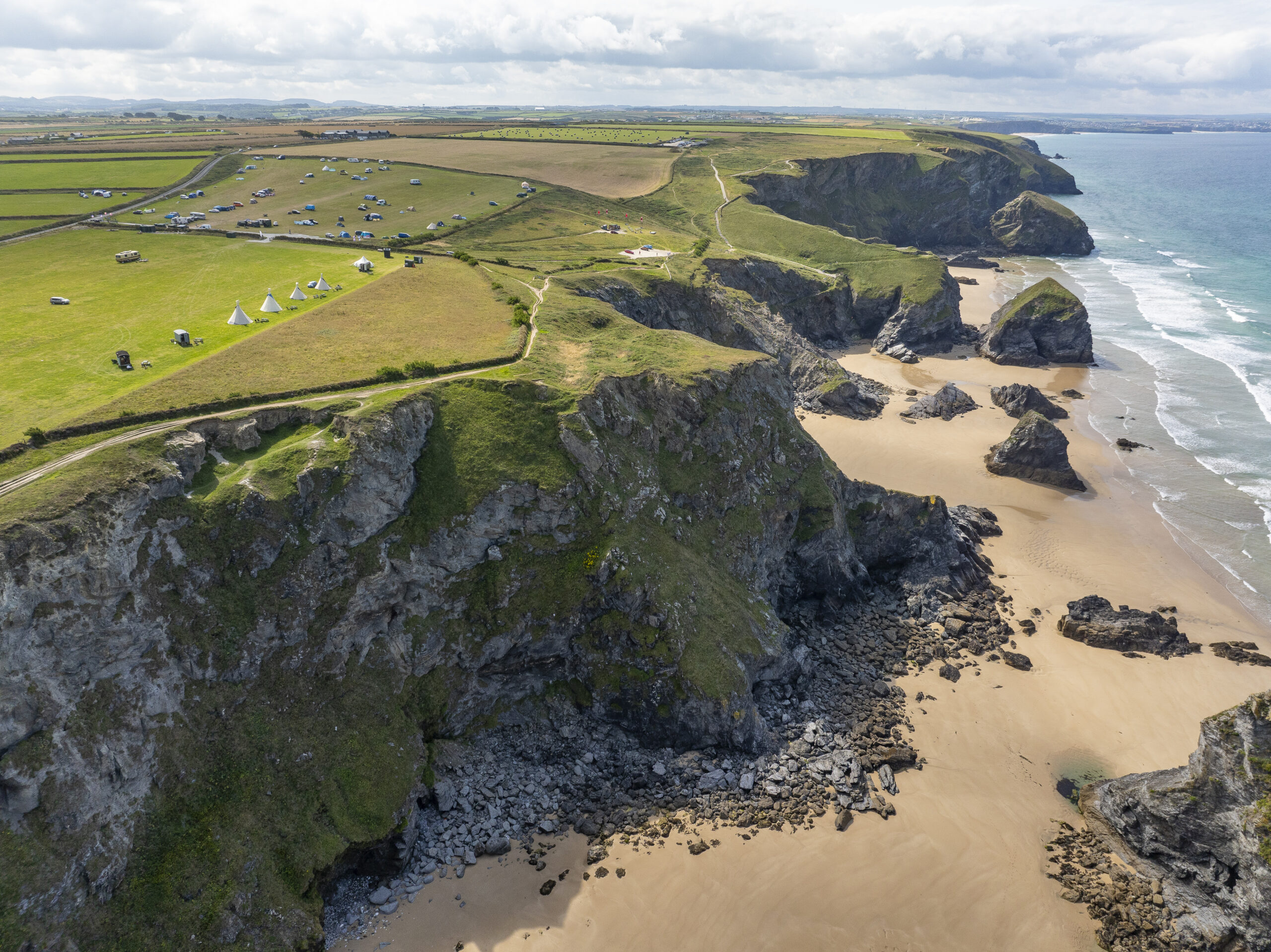
High above the crashing waves, projecting west into the Atlantic are the remains of Redcliff Cliff Castle. This Iron Age stronghold is full of mystery, history and wild beauty.
c. 700BC-100AD
Cliff castles like Redcliff were built during the Iron Age for a range of purposes, which likely changed over time.
2003
Redcliff Cliff Castle was listed as a Scheduled Monument in 2003, protecting the site for future generations to learn from and enjoy.
Projecting west into the Atlantic are the remains of an early Iron Age (c. 2800-2000 years ago) cliff castle. The impressive banks and rock cut ditches are the remains of two sets of ramparts enclosing a defensible crescent shaped interior, with steep cliffs on the seaward side.
These impressive defences may have originally been stone faced and the deeper ditch still has steep faces of exposed cut bedrock. It is likely that the majority of the interior of the monument has now eroded away and only the ramparts and the causeway through the centre remain.
As many as 65 possible cliff castles have been identified in Cornwall, variously interpreted as strongholds to control trade and communication routes, a seat of power for a tribal chief or as ritual spaces between the land and the sea.
Redcliff Cliff Castle was part of Cornwall National Landscape’s A Monumental Improvement Project, which aimed to ensure that 40 scheduled monuments across Cornwall National Landscape were better protected, identified and enjoyed by a wider range of people. Between 2022 – 2025, the Project delivered conservation repairs, installed new heritage interpretation signage, ran a range of community volunteering events and developed new website resources. The Project was primarily funded thanks to The National Lottery Heritage Fund, with support from our other partners – Cornwall Council, Historic England, The National Trust, Cornwall Heritage Trust and Cornwall Archaeological Society.
Redcliff Cliff Castle was built over 2,000 years ago during the Iron Age when people built strong defences using earth banks and ditches. These ramparts helped protect a crescent-shaped area on the clifftop. With steep drops to the sea on one side and strong walls on the other, it would have been a great place to keep watch, stay safe and control important resources in the local area.
We’re not exactly sure what cliff castles like this were used for. Some may have been strongholds for tribal leaders, others places for trade or even for rituals linked to the land and sea. Most of the interior of Redcliff has now been lost due to coastal erosion, but the impressive defences and the causeway that once led inside still remain. They offer a glimpse into how people living in Cornwall organised themselves and adapted to living in challenging conditions over two thousand years ago.


Explore Redcliff Cliff Castle and the cliff edge up close safely with this 3D model of the site.
One of the most exciting things you can spot at Redcliff Cliff Castle is the remains of its ramparts, easily identified earth banks and ditches carved through the the rock. These were built over 2,000 years ago, possibly to protect the people who lived here or their resources. The ramparts form a big crescent shape, wrapping around the cliff edge. Even though the sea has washed some of the land away over time, you can still see where the entrance once was and imagine what it might have looked like when it was a busy, important place high above the waves, controlling the land and seascape.

Redcliff Cliff Castle isn’t just special because of its history it’s also home to some amazing wildlife. If you’re lucky, you might spot seabirds like fulmars or gulls gliding along the cliff edge. In the fields above, wildflowers like sea thrift and kidney vetch bloom in spring and summer, adding pops of colour to the green grass. Keep an eye out for butterflies fluttering past and maybe even a rabbit or two hiding in the bushes. The salty sea air and open skies make this a great spot for nature lovers as well as history hunters.
You can help take care of Redcliff Cliff Castle just by being kind to the site and the nature around it. Stick to the paths so you don’t damage the grassy ramparts or wildflowers. If you bring snacks, take any rubbish home with you seabirds and other animals can get hurt if they find plastic or food wrappers. Every small action helps protect this amazing place for the future.
Looking after Redcliff Cliff Castle isn’t always easy. Because it sits right on the edge of the sea, wind and waves are slowly wearing it away and each year a little more of the land disappears. Experts are working hard to record and protect what’s left, but nature moves quickly.
Volunteers and archaeologists have been helping to understand the site better and share its story with everyone. It’s a race against time, but every visit, photo and conversation helps keep Redcliff’s history alive.

Redcliff Cliff Castle becomes Dinas Alsrudh in Cornish.
It means dinas – hillfort, als – cliff & rudh – red.
Plan your visit with essential details on transport and parking options, available facilities, route descriptions and accessibility information to ensure a comfortable and enjoyable experience at any of our historical monuments.
When enjoying the countryside, it’s important to follow the Countryside Code to protect nature and preserve its beauty for everyone. This includes simple, respectful actions like not littering, always take your rubbish home or dispose of it properly in bins. Stick to designated paths to avoid damaging crops or wildlife habitats, and keep gates and property as you find them, whether open or closed. Be mindful of livestock and wildlife by keeping dogs under control and not disturbing animals. By following these guidelines, you contribute to the protection of the environment and ensure that others can enjoy the countryside as well.
Please note that access to Redcliff Cliff Castle is limited, with uneven ground and no formal paths suitable footwear is recommended and it may not be accessible for wheelchairs or buggies.
There are no toilets or visitor facilities on site, so it’s a good idea to plan ahead before your visit.
Parking is very limited near the site, so visitors are encouraged to walk from nearby footpaths where possible.
Looking to explore the monument? Check out this walk on the IWalkCornwall website – Redcliff Cliff Castle

You can play a part in preserving its beauty and history for future generations. Volunteering opportunities range from helping with conservation efforts to assisting with educational programmes and community events. Whether you have a passion for nature, history, or simply love the outdoors, there’s a way for you to contribute. Join us and make a difference while connecting with others who share your enthusiasm for Cornwall’s heritage.

Cornwall National Landscape is a non-profit organisation that conserves the unique landscapes, wildlife, and cultural heritage of Cornwall. Volunteering for the protected landscape provides a rewarding experience of giving back to the community and preserving the Cornwall's natural beauty.

Discover a wealth of knowledge in our Resources section, where you can download detailed research documents, reports, and source material compiled by our archaeology team to enhance your understanding of the site.

