Monitoring & Evidence
Our objectives can be achieved through various means such as but not...
View page
Oratri Peran
500's AD
The legend of St Piran establishes the Oratory as being built in the 5th or 6th centuries and previous excavations have pointed to an inscribed stone as evidence for this dating.
1100's AD
Modern excavation and analysis of the site has suggested a 12th Century date for the Oratory's construction, comparing the style and fabric of the building to other Cornish examples.
1800's
The site was first excavated in 1835 by William Mitchell, who believed the church to be "probably one of the most ancient ever laid open". It was re-excavated by Rev. Haslam in 1843, and by 1855 the condition had deteriorated with Michell lamenting that "the hand of curiosity proved more ruthless than the sand"
20th Century
The site was excavated throughout the 20th century, and altered by conservation efforts to stabilise and improve the condition by various groups including the Royal Institution of Cornwall. In 1980 the decision is made to rebury the monument due to the flooding and sand encroachment issues.
2014-2019
The site was re-excavated in 2014 to assess its condition, having been listen on the Heritage at Risk register due to seasonal flooding. Further conservation repairs works were carried out in 2019.
Thousands of bones have been exposed across the dunes surrounding St Piran’s Oratory by wind, floods, and digging over the centuries, but this ancient little chapel was lost and forgotten until the shifting sands revealed it in 1835. According to legend, a chapel was built on this site by St Piran in 6th century and this spot has become an iconic Cornish site.
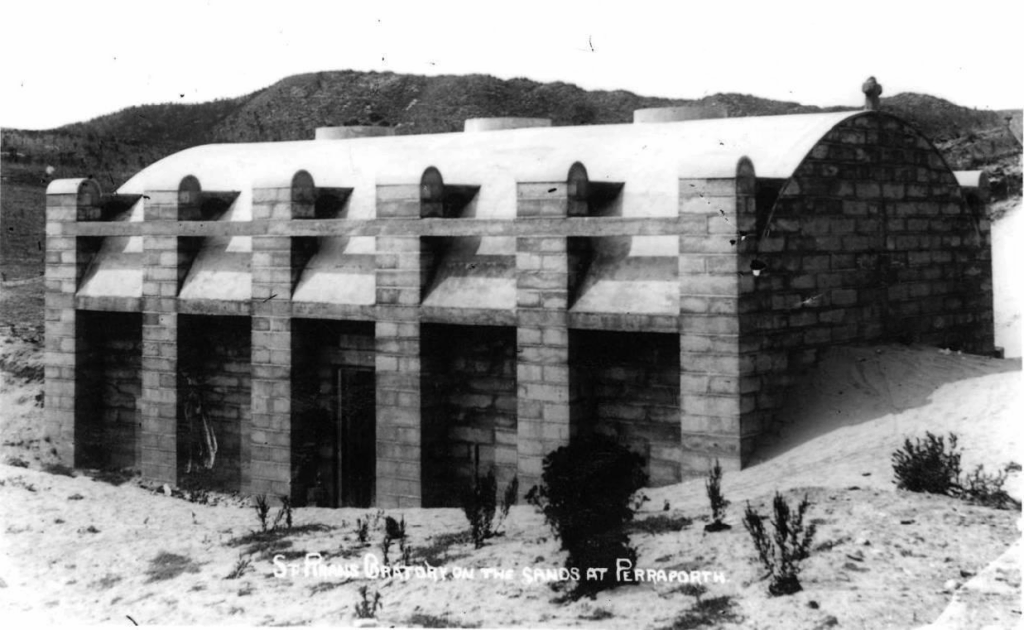
The site was first excavated in 1835 by William Michell, who revealed the structure of the Oratory, with its stone altar, benches and doorway with its decoration of two carved stone heads. A rich history of excavation followed, along with huge challenges as the site became flooded, threatening the fragile ruins. In 1910 a concrete shelter was built, which aimed to protect the site from sand encroachment and the worst of the water damage. Despite these efforts, the Oratory’s condition continued to decline and was reburied under and artificial dune in 1980.
In 2014, the site was re-excavated by Cornwall Archaeological Unit along with support from volunteer diggers, revealing the Oratory once again. This excavation uncovered medieval walls, flooring and established a complex chronology of the development and alteration of the site. Surrounding the Oratory, several burials were excavated containing grave goods such as flint tools and white pebbles.
Conservations efforts were made in 2019 to help stabilise the walls and provide protection to the exposed tops. Ongoing monitoring of the site will help to preserve this unique part of Cornish heritage for generations to come.
St Piran’s Oratory was part of Cornwall National Landscape’s A Monumental Improvement Project, which aimed to ensure that 40 scheduled monuments across Cornwall National Landscape were better protected, identified and enjoyed by a wider range of people. Between 2022 – 2025, the Project delivered conservation repairs, installed new heritage interpretation signage, ran a range of community volunteering events and developed new website resources. The Project was primarily funded thanks to The National Lottery Heritage Fund, with support from our other partners – Cornwall Council, Historic England, The National Trust, Cornwall Heritage Trust and Cornwall Archaeological Society.
St Piran’s Oratory is key to Cornwall’s cultural and spiritual heritage. Traditionally believed to be the earliest Christian site in mainland Britain, it is closely associated with St Piran, the 6th-century Irish missionary who brought Christianity to Cornwall.
Historical references to the site date back to the Domesday Book of 1086, which mentions a monastery at Lanpiran. Over the centuries since, the Oratory became a place of pilgrimage, with many accounts describing thousands of human bones, including full skeletons exposed in the surrounding cemetery. Excavations in the 19th century revealed a compact yet evocative structure, with a stone altar, doorway and small window.
The 20th century saw dramatic changes to the monument, including the construction of a concrete shelter in 1910 and eventual reburial in 1980. Despite being hidden under sand, the Oratory’s public profile grew, especially as St Piran became a symbol of Cornish identity. Annual processions on St Piran’s Day and widespread public interest led to its re-excavation in 2014, assessing the Oratory’s condition and allowing archaeologists to examine and record the features using new technology such as Photogrammetry.
Today, St Piran’s Oratory stands as an archaeological and cultural treasure and a monument to Cornwall’s past. Its preservation is vital to understanding the early Christianity in Cornwall, and celebrating Cornwall’s unique identity.
According to legend, Piran was born in Ireland in the 6th century. His miraculous deeds and popularity with the people angered the jealous King of Leinster, who ordered Piran to be tied to a millstone and cast into the sea. Astonishingly, the millstone floated, carrying St Piran safely across the waves to the dunes of Perranporth, where he established his Oratory and began preaching Christianity to the local people.
St Piran is celebrated as the patron saint of tinners, and his flag has become the Cornish national banner – the white cross on a black background is said to signify the white tin coming out of the black ore and the light of truth shining in the darkness.
St Piran’s legacy still lives through annual processions, local folklore and his Oratory, a cultural landmark for Cornish History.


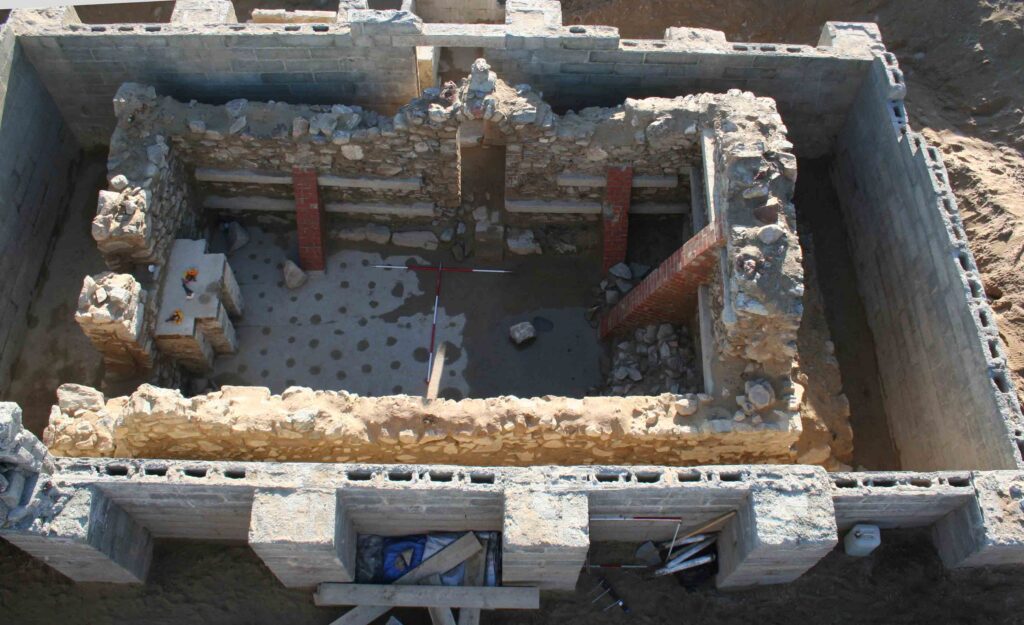


Photogrammetry data captured by 3deep using a UAV (drone). Project was completed on behalf of the St Piran’s Trust and Natural England.
St Piran’s Oratory is full of unique details that reveal its long and fragile history. The remains of its stone altar and benches give a glimpse into how people once gathered here for worship. The doorway with carved stone heads is a rare and special survival, showing that this was always a place of importance. Excavations have also uncovered burials around the Oratory, some with grave goods like flint tools and white pebbles, connecting this early Christian site with older traditions of belief and remembrance.
The Oratory has faced huge challenges from sand, water and time. A concrete shelter built in 1910 and its reburial in 1980 were both attempts to protect the fragile structure. When the site was uncovered again in 2014, archaeologists recorded the medieval walls and flooring using modern techniques such as photogrammetry. Today, conservation work continues to stabilise the walls, helping to ensure that this remarkable monument survives for future generations to explore.
The dunes around St Piran’s Oratory are alive with hardy plants and wildlife that thrive in this sandy, windswept landscape. Marram grass is the star of the dunes, with its long roots helping to bind the shifting sands in place. In summer, wildflowers such as sea holly, lady’s bedstraw and bird’s-foot trefoil add splashes of colour, attracting butterflies and bees. The area is also home to ground-nesting birds like skylarks and meadow pipits. This mix of plants and animals makes the dunes a fragile but important habitat.
Visitors can help protect St Piran’s Oratory and the surrounding dunes by sticking to the marked paths and avoiding climbing on the monument itself, as even small amounts of wear can damage the fragile stonework. Keeping dogs on leads and being mindful of where you walk helps wildlife to thrive. Taking litter home and leaving only footprints ensures this special landscape remains unspoilt for others to enjoy. By treating the site with care, visitors play an active role in preserving both the Oratory and its natural setting for future generations.
Protecting St Piran’s Oratory has never been simple. Over the centuries, shifting sands, flooding and constant exposure to the elements have threatened the little chapel. In the past, people tried to protect it by building a concrete shelter in 1910, and later by reburying it under an artificial dune in 1980. More recently, archaeologists and conservation teams re-excavated the site in 2014 and carried out work in 2019 to stabilise the fragile walls. The main challenge today is finding the right balance between allowing people to enjoy and learn from the site, while also shielding it from damage caused by weather, erosion and even footfall. Ongoing monitoring and careful management are essential to make sure this important piece of Cornish heritage survives for generations to come.
Grid Ref: SS 24302 11577
Find with what3words: hack.lyricism.wicked
Plan your visit with essential details on transport and parking options, available facilities, route descriptions and accessibility information to ensure a comfortable and enjoyable experience at any of our historical monuments.
When enjoying the countryside, it’s important to follow the Countryside Code to protect nature and preserve its beauty for everyone. This includes simple, respectful actions like not littering always take your rubbish home or dispose of it properly in bins. Stick to designated paths to avoid damaging crops or wildlife habitats and keep gates and property as you find them, whether open or closed. Be mindful of livestock and wildlife by keeping dogs under control and not disturbing animals. By following these guidelines, you contribute to the protection of the environment and ensure that others can enjoy the countryside as well.
Access to St Piran’s Oratory is across sandy dunes with no firm paths, so it can be difficult for wheelchairs, buggies, or anyone with limited mobility.
There are no facilities at St Piran’s Oratory itself, no toilets, café, or visitor centre so it’s best to come prepared. The nearest amenities can be found in nearby Perranporth.
Parking is available at nearby car parks in Perran Sands and Perranporth, but reaching the Oratory involves a walk of around 20 to 30 minutes across the dunes, so sturdy footwear is recommended.
Looking to explore the monument? Check out this walk on the IWalkCornwall website – St Piran’s Oratory

You can play a part in preserving Cornwall National Landscape’s beauty and history for future generations. Volunteering opportunities range from helping with conservation efforts to assisting with educational programmes and community events. Whether you have a passion for nature, history, or simply love the outdoors, there’s a way for you to contribute. Join us and make a difference while connecting with others who share your enthusiasm for Cornwall’s heritage. Scroll down and follow the links to our Volunteering Hub to find out more!

Cornwall National Landscape is a non-profit organisation that conserves the unique landscapes, wildlife, and cultural heritage of Cornwall. Volunteering for the protected landscape provides a rewarding experience of giving back to the community and preserving the Cornwall's natural beauty.

Discover a wealth of knowledge in our Resources section, where you can download detailed research documents, reports, and source material compiled by our archaeology team to enhance your understanding of the site.