Monitoring & Evidence
Our objectives can be achieved through various means such as but not...
View page
Kastel Als Karvran
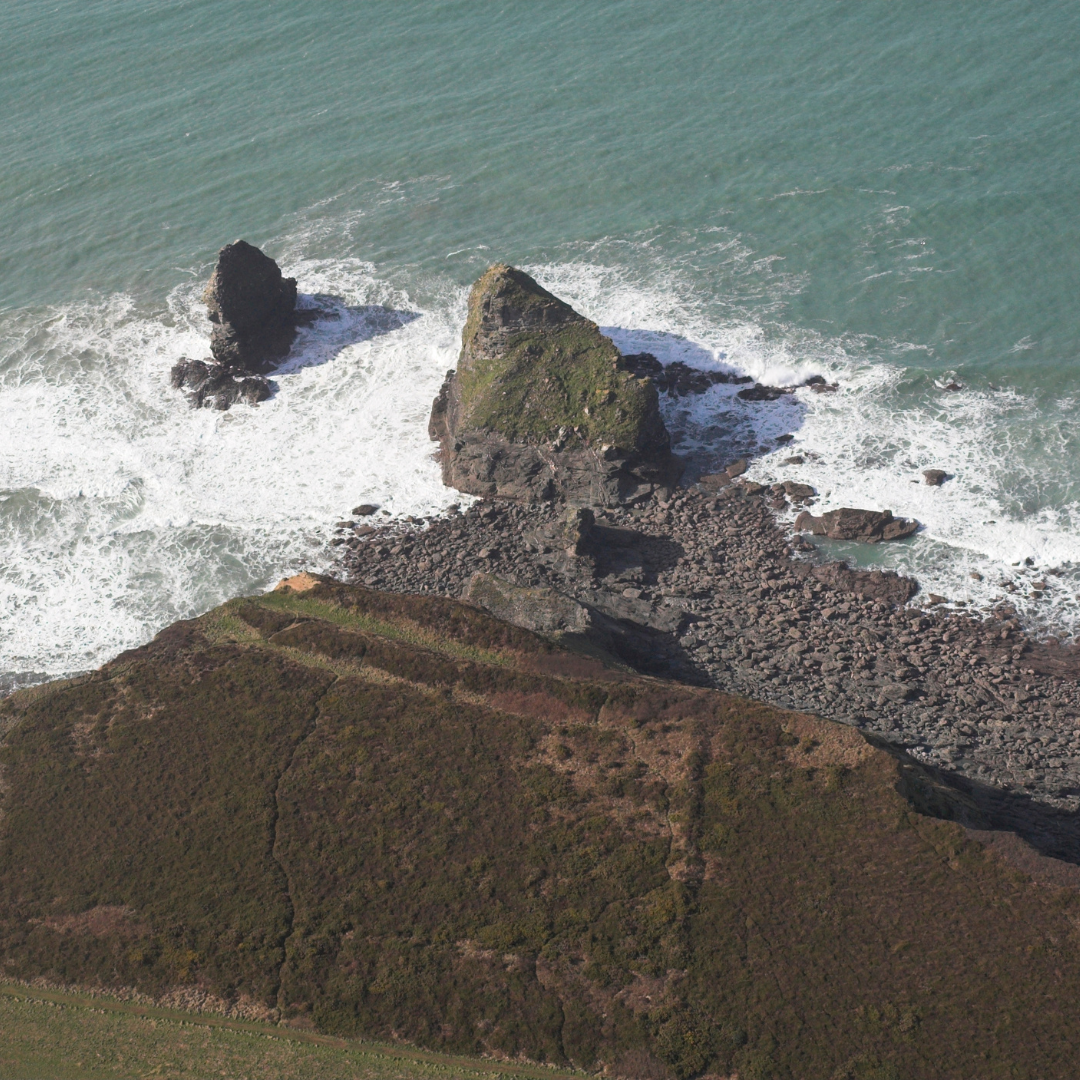
Perched high above the sea near Illogan, Carvannel Cliff Castle is one of Cornwall’s ancient promontory forts. Even though not much remains, its clifftop location tells a story of people living and defending this dramatic stretch of coast over 2,000 years ago.
Carvannel Cliff Castle (AKA Crane Castle) sits along the rugged north coast of Cornwall between Godrevy and Portreath. Built during the Iron Age, between 800 BC and 43 AD, it’s what archaeologists call a promontory fort, a defensive settlement that used the natural protection of the cliffs, with extra ramparts built across the narrow landward side. These types of forts were often used for safety and as a place to live, especially in times of tension. While there’s little visible today, the site’s location offers sweeping views and a sense of why people might have chosen this spot to build their home and protect their community.
Carvannel Cliff Castle was part of Cornwall National Landscape’s A Monumental Improvement Project, which aimed to ensure that 40 scheduled monuments across Cornwall National Landscape were better protected, identified and enjoyed by a wider range of people. Between 2022 – 2025, the Project delivered conservation repairs, installed new heritage interpretation signage, ran a range of community volunteering events and developed new website resources. The Project was primarily funded thanks to The National Lottery Heritage Fund, with support from our other partners – Cornwall Council, Historic England, The National Trust, Cornwall Heritage Trust and Cornwall Archaeological Society.
Though smaller and less well-preserved than other cliff castles in Cornwall, Carvannel is still an important reminder of Iron Age life. Its position shows how local communities made use of the land’s natural defences to guard against attacks. It also forms part of a wider network of similar forts across the Cornish coast, helping us piece together how people lived, worked and protected themselves thousands of years ago. Today, it stands as a quiet but powerful link to Cornwall’s deep past and a site we must continue to care for.


Although little survives above ground at Carvannel Cliff Castle, its hidden features are still important. The shape of the headland and the likely remains of man-made ramparts mark it out as a classic Iron Age promontory fort. These kinds of forts used the steep cliffs as natural defences, with ditches and banks added across the landward side. Even without visible walls, the landscape holds clues from soil changes to buried structures that could tell us more about life here over 2,000 years ago.

Carvannel Cliff Castle sits within a wild coastal landscape, rich in nature. The cliffs and heathland are home to hardy plants like gorse, heather and thrift.
You can help look after Carvannel Cliff Castle just by being a thoughtful visitor. Stick to the paths to avoid damaging the ground and try not to disturb any plants or nesting birds. There aren’t many visible remains, but the site is still really important. Taking litter home and keeping dogs under control also helps protect both the landscape and the wildlife that lives here. Every little bit of care makes a big difference.
Carvannel Cliff Castle might look quiet, but looking after it takes work. Erosion from wind and rain slowly wears away the cliffs and visitor footfall can add pressure to the fragile ground. Because not much survives above the surface, it’s easy for people to miss how important the site is. Local heritage teams are working to monitor its condition and raise awareness, but protecting a site like this with no fences or signs is always a challenge.
Carvannel Cliff Castle becomes Kastel Als Karvran in Cornish.
It means kastel – castle, als – cliff, karvran – crow fort.
Plan your visit with essential details on transport and parking options, available facilities, route descriptions and accessibility information to ensure a comfortable and enjoyable experience at any of our historical monuments.
When enjoying the countryside, it’s important to follow the Countryside Code to protect nature and preserve its beauty for everyone. This includes simple, respectful actions like not littering, always take your rubbish home or dispose of it properly in bins. Stick to designated paths to avoid damaging crops or wildlife habitats and keep gates and property as you find them, whether open or closed. Be mindful of livestock and wildlife by keeping dogs under control and not disturbing animals. By following these guidelines, you contribute to the protection of the environment and ensure that others can enjoy the countryside as well.
There’s no formal path to Carvannel Cliff Castle and the coastal terrain is uneven and steep in places, so access can be challenging for some visitors.
There are no on-site facilities at Carvannel Cliff Castle, so visitors should come prepared and use nearby amenities in Illogan or Portreath.
There’s no dedicated parking at Carvannel Cliff Castle, but limited roadside parking may be available nearby. The closest larger parking options are in Portreath.
Looking to explore the monument? Check out this walk on the IWalkCornwall website – Crane Castle

You can play a part in preserving its beauty and history for future generations. Volunteering opportunities range from helping with conservation efforts to assisting with educational programmes and community events. Whether you have a passion for nature, history, or simply love the outdoors, there’s a way for you to contribute. Join us and make a difference while connecting with others who share your enthusiasm for Cornwall’s heritage. Contact us to find out more about how you can get involved!

Cornwall National Landscape is a non-profit organisation that conserves the unique landscapes, wildlife, and cultural heritage of Cornwall. Volunteering for the protected landscape provides a rewarding experience of giving back to the community and preserving the Cornwall's natural beauty.

Discover a wealth of knowledge in our Resources section, where you can download detailed research documents, reports, and source material compiled by our archaeology team to enhance your understanding of the site.