Monitoring & Evidence
Our objectives can be achieved through various means such as but not...
View page
Dinan (Ardhow Magor) 4
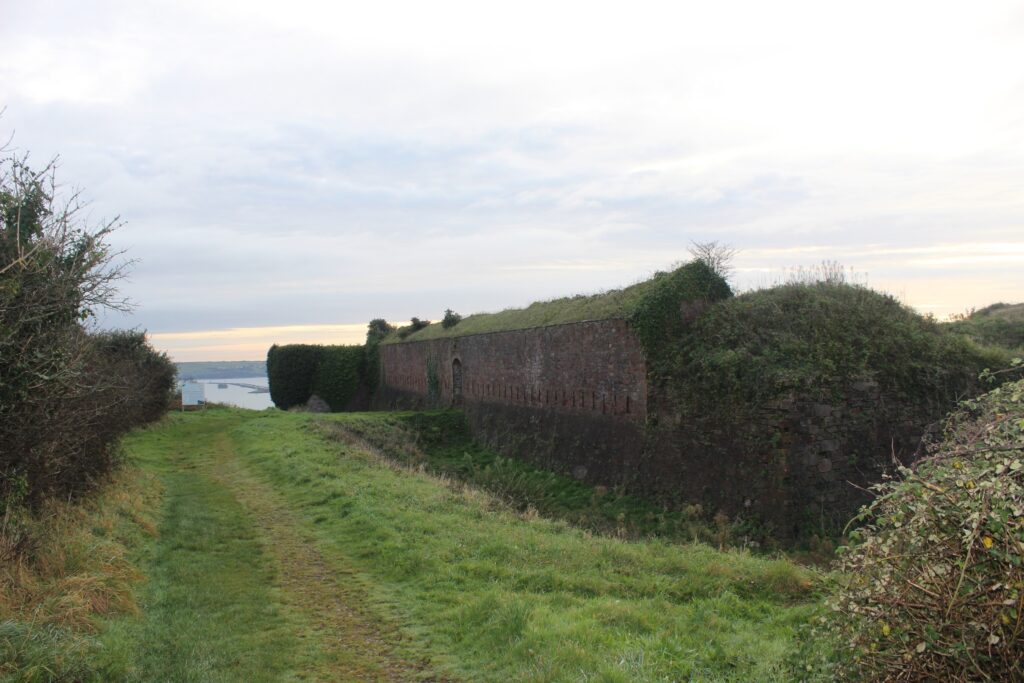
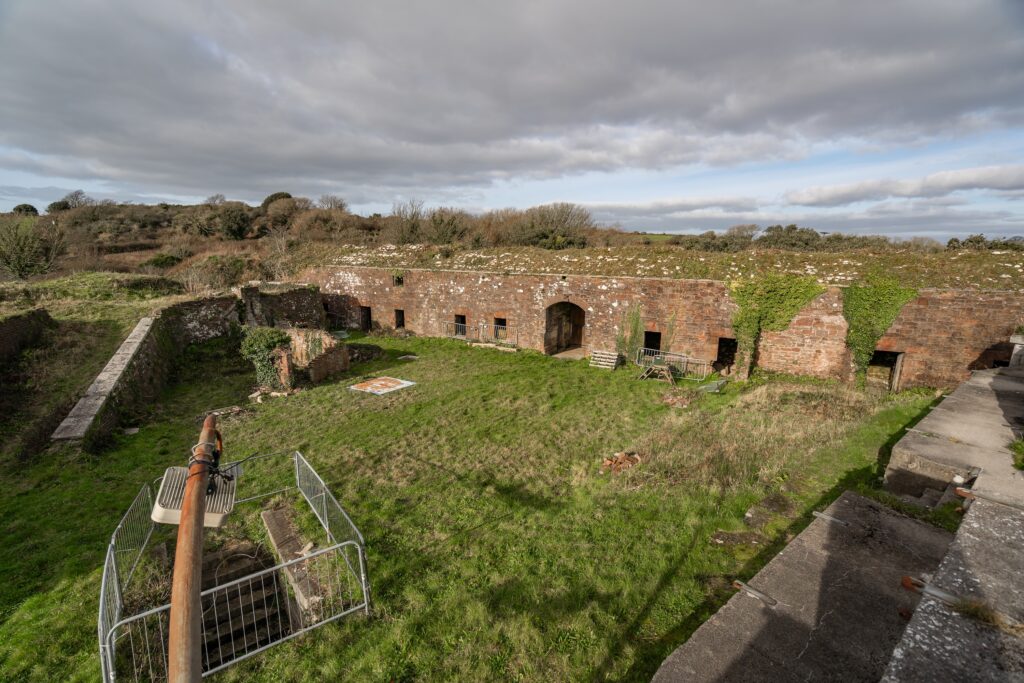
Perched high on the Rame Peninsula, Redoubt 4 now known as Grenville Battery was built to guard the Cornish coast from attack.
Redoubt 4 is one of five defensive forts built along Maker Heights in the late 1700s. This stone and brick structure was carefully placed to keep watch over Cawsand Bay and Plymouth Sound. It includes thick walls, underground storage rooms called magazines, gun platforms and even a musket gallery for close-up defence. The whole fort is shaped like a triangle, with strong walls and a ditch to help protect it. Over time, it was rebuilt and reused, playing an important role in Britain’s coastal defence for nearly 200 years.
Redoubt 4 was part of Cornwall National Landscape’s A Monumental Improvement Project, which aimed to ensure that 40 scheduled monuments across Cornwall National Landscape were better protected, identified and enjoyed by a wider range of people. Between 2022 – 2025, the Project delivered conservation repairs, installed new heritage interpretation signage, ran a range of community volunteering events and developed new website resources. The Project was primarily funded thanks to The National Lottery Heritage Fund, with support from our other partners – Cornwall Council, Historic England, The National Trust, Cornwall Heritage Trust and Cornwall Archaeological Society.
Originally built between 1760 and 1791 during the American War of Independence, Redoubt 4 was part of a chain of forts designed to defend the coast. Although the larger fort it was meant to support was never completed, this redoubt had 15 gun positions. After being disarmed in 1815, it was brought back into action in the 1800s, modernised with stronger walls and better shelter. Renamed Grenville Battery in 1899, it protected against sea attacks through both World Wars. The site was finally retired from military use in 1948, leaving behind a fascinating glimpse into Cornwall’s wartime history.

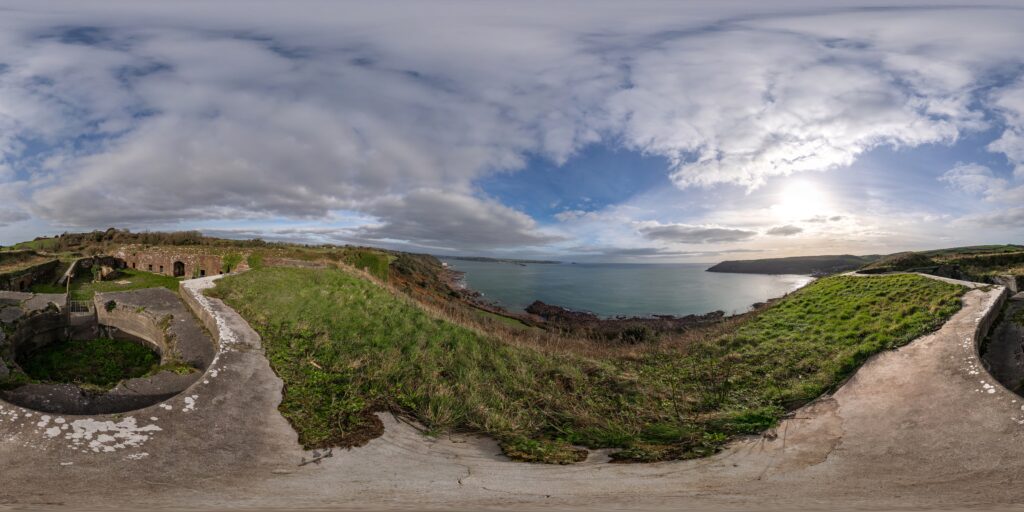


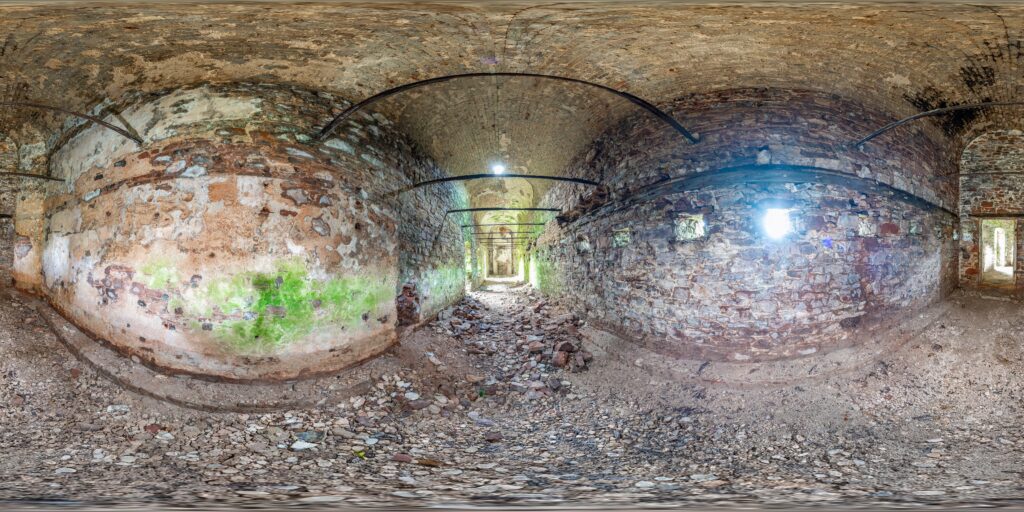



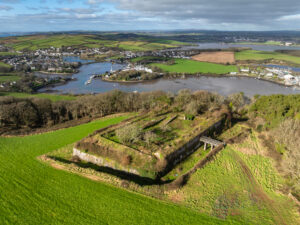
3D SFM Photogrammetry survey of Redoubt 4 (Grenville Battery) at Makers Heights on the Rame Peninsula in Cornwall, UK

Redoubt 4 is packed with clever design. Its thick stone and brick walls were built to survive cannon fire and the whole fort is shaped like a triangle to cover all angles of attack. You can still spot the old musket loops in the walls, once used by soldiers to defend the entrance. There are gun emplacements facing out to sea, hidden underground magazines where gunpowder was stored and a barracks building with a rare bomb-proof roof.
The fort’s raised position means it has fantastic views over Cawsand Bay and Plymouth Sound. That high ground made it perfect for spotting enemy ships. Today, it gives us a clear look into how coastal defences were built and changed over time. From its original 18th-century layout to later additions for new weapons, Redoubt 4 tells a powerful story of Cornwall’s role in defending Britain. Keeping it safe means future generations can keep learning from it.

The land around Redoubt 4 is home to a mix of wildlife and wild plants. Grassy slopes, old stone walls and nearby woodland create safe spaces for birds, insects and small mammals. In spring and summer, wildflowers like red campion and oxeye daisy brighten the area, attracting bees and other pollinators. These natural features not only make the site beautiful, but also help support local biodiversity another reason it’s important to protect the fort and its surroundings.
Everyone can play a part in protecting Redoubt 4. Please stick to the paths and avoid climbing on walls or structures, as this helps prevent damage to the historic stonework. Take any litter home with you to keep the site clean for wildlife and other visitors. If you notice anything unusual, like signs of damage or erosion, reporting it to local heritage teams can make a big difference. By treating the site with care, you help make sure this special place stays safe and inspiring for years to come.
Redoubt 4 has stood for over 250 years, but looking after a historic fort like this isn’t easy. Local heritage groups and volunteers have worked hard to clear vegetation, repair stonework and protect what’s left of the original features. Careful surveys help us understand how the fort has changed over time and what needs to be done to preserve it for the future.
But there are challenges too. Years of exposure to wind, rain and salty sea air slowly wear away the fort’s stone and brickwork. In recent times, the site also faced extra pressure from humans staying illegally on-site leading to a build-up of rubbish. Clearing and repairing the damage has taken significant care and resources. Alongside ongoing issues like erosion and invasive plants, this shows just how vulnerable historic places can be and how much they rely on long-term protection and community support.
When enjoying the countryside, it’s important to follow the Countryside Code to protect nature and preserve its beauty for everyone. This includes simple, respectful actions like not littering always take your rubbish home or dispose of it properly in bins. Stick to designated paths to avoid damaging crops or wildlife habitats, and keep gates and property as you find them, whether open or closed. Be mindful of livestock and wildlife by keeping dogs under control and not disturbing animals. By following these guidelines, you contribute to the protection of the environment and ensure that others can enjoy the countryside as well.
Redoubt 4 sits on a high point of the Rame Peninsula, with steep ground and uneven surfaces around the site. There’s no formal path into the redoubt and the ground can be rough, with slopes, grass and historic stonework underfoot. This means access may be challenging for wheelchair users, visitors with limited mobility, or pushchairs. There is no parking or visitor facilities on site, but nearby footpaths offer scenic approaches for those able to manage a walk. While not fully accessible, we’ve worked to improve how everyone can enjoy the site including through panoramic images, stories and digital resources that bring the fort to life from wherever you are.
There are no on-site facilities at Redoubt 4 so there are no toilets, café or visitor centre as the site remains largely untouched to protect its historic character. The redoubt is open to the elements, so be sure to dress for the weather and bring anything you might need. The nearest facilities, including parking, toilets and places to eat can be found in nearby villages such as Kingsand and Millbrook.
There is no dedicated parking at Redoubt 4 and the narrow rural lanes nearby offer very limited space for vehicles. Visitors are encouraged to park in Kingsand or Millbrook, where public car parks are available and then explore the site on foot via local footpaths. Please avoid parking in gateways or along access tracks, as these are needed by local farmers and residents.
Looking to explore the monument? Check out this walk on the IWalkCornwall website – Maker Redoubts

You can play a part in preserving Cornwall National Landscape’s beauty and history for future generations. Volunteering opportunities range from helping with conservation efforts to assisting with educational programmes and community events. Whether you have a passion for nature, history, or simply love the outdoors, there’s a way for you to contribute. Join us and make a difference while connecting with others who share your enthusiasm for Cornwall’s heritage. Scroll down and follow the links to our Volunteering Hub to find out more!

Cornwall National Landscape is a non-profit organisation that conserves the unique landscapes, wildlife, and cultural heritage of Cornwall. Volunteering for the protected landscape provides a rewarding experience of giving back to the community and preserving the Cornwall's natural beauty.

Discover a wealth of knowledge in our Resources section, where you can download detailed research documents, reports, and source material compiled by our archaeology team to enhance your understanding of the site.